
Which small red light device should you buy?
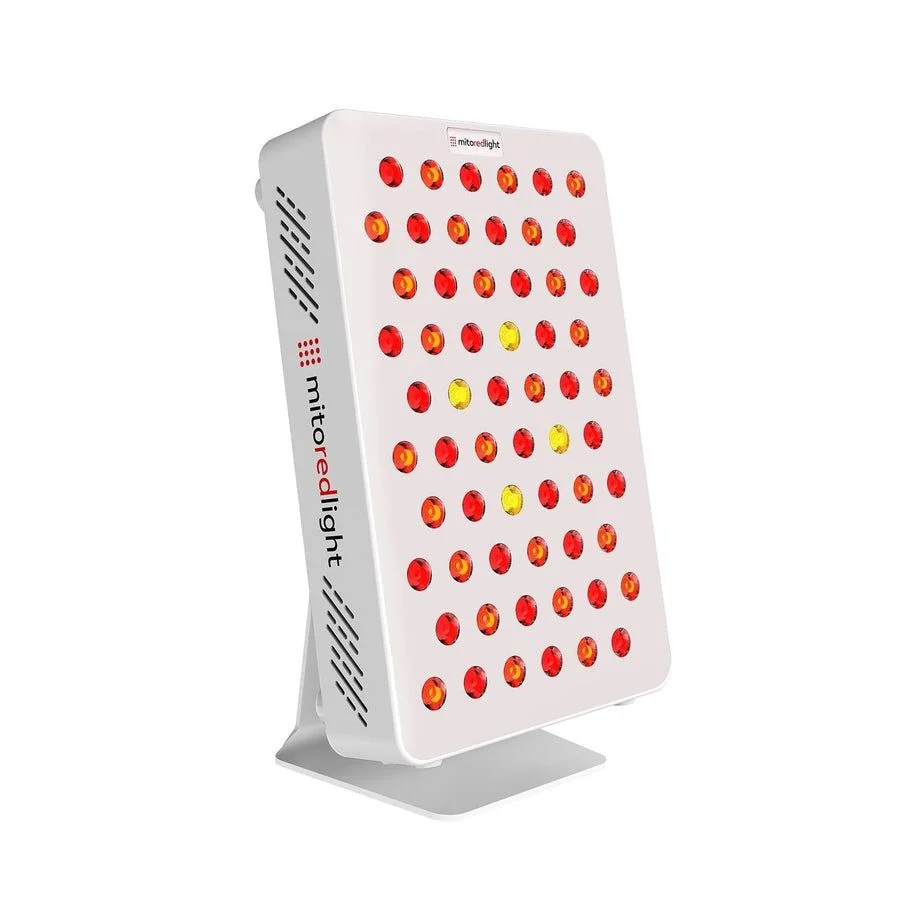
Choose the MitoPRO 300X if you want a small tabletop panel for the least money. It’s $449 on Mito’s page, with a stand, goggles and a three-year warranty in the package911. The catch: Mito’s outside lab measured 38.2 mW/cm² at 6 inches, less than a third of the 130-plus Mito prints from a solar meter, and Mito gives no figure at the 12 to 18 inches it tells you to sit910.
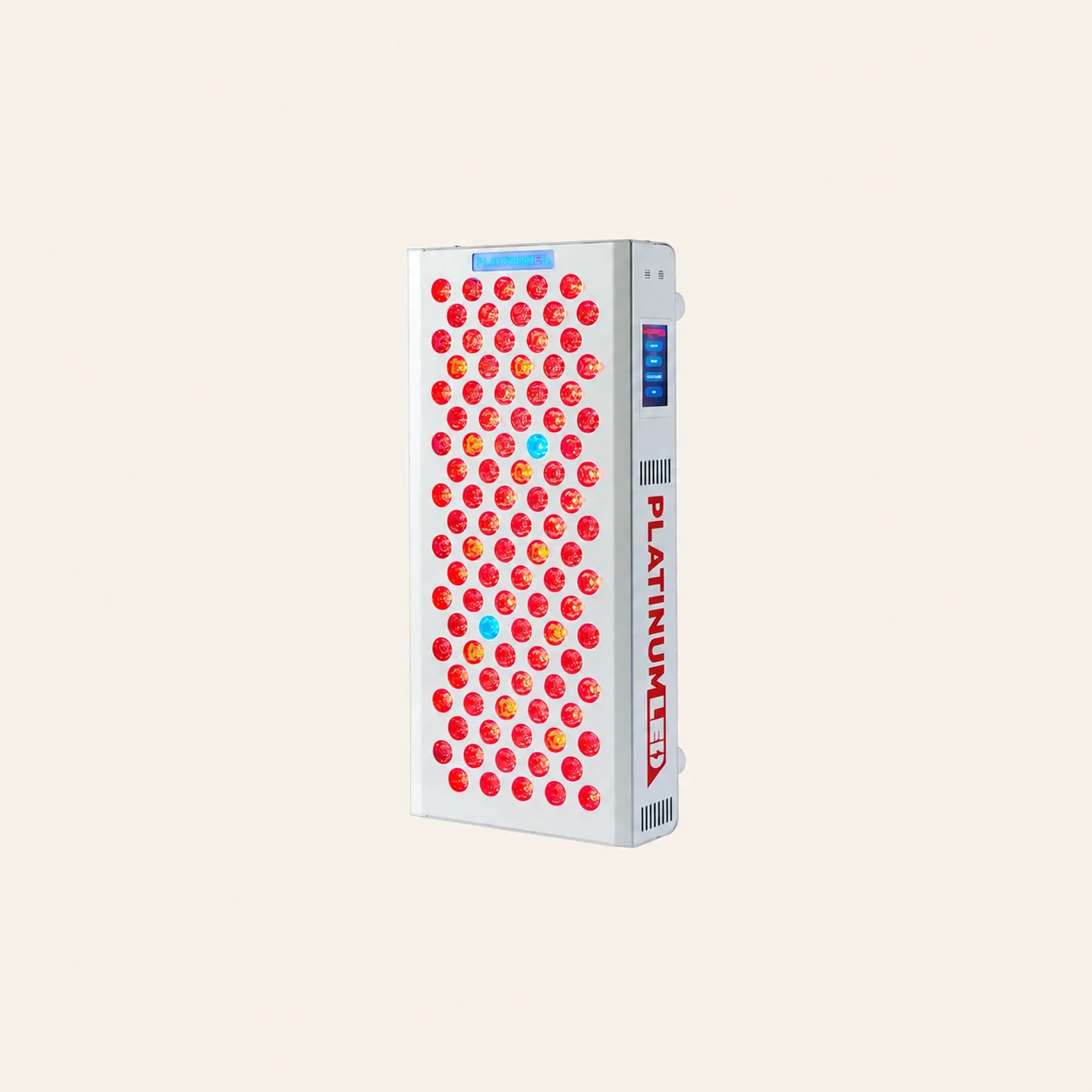
Choose the BIOMAX 300 if you want to know the output where you’ll sit. A lab PlatinumLED hired measured it at 6, 12, 18 and 24 inches, and it averaged 56.25 mW/cm² at 12 inches14. It’s $659, and a return costs a 20% restocking fee plus your shipping1315.
Choose Lumebox 2.0 if you want a battery handheld for the face or one joint. It’s $629, and Lumebox reports 125 mW/cm² red and 140 mW/cm² near infrared at 1 cm, but nothing at the 6 inches it advises for skin13. A return carries a 15% restocking fee5.
Choose Celluma PRO PLUS only if a flexible battery panel is worth $1,995 to you. FDA lists Celluma’s clearances under the names Celluma3 and CONTOUR, not PRO PLUS, and a device used for 10 minutes or more can’t be returned182025. None of these makers’ figures shows a health effect.
Four small devices side by side
Prices are US prices on each maker’s page, checked Nov 6, 2026, before tax191318. All four cover one area at a time. For six full-length panels, see Full-length red light therapy panels compared. For the three Mito sizes against each other, see the MitoPRO review.
| Device | Best for | US price | Price and where to buy | Shape and size | Light and LEDs | Session and power |
|---|---|---|---|---|---|---|
| Lumebox 2.0 | A battery handheld for the face or one joint | $629. The stand is $59 extra1 | $629US price, checked Check price at Lumebox for LUMEBOX 2.0 | Handheld, 7.25 x 4.25 x 1.75 in, about 4 lb2 | 660 nm red and 850 nm near infrared. The spec sheet lists 15 LEDs2 | A 12-minute cycle, then a 3-minute cool-down. The battery gives 140 to 150 minutes per charge, and the manual says it won’t run while plugged in24 |
| MitoPRO 300X | A small tabletop panel with a three-year warranty | $4499 | $449US price, checked Check price at Mito Red Light for MitoPRO 300X | Panel, 9.5 x 14.5 in, 7 lb, with a tabletop stand in the package9 | Six peak wavelengths from 590 to 850 nm, 60 lenses and 120 chips9 | Mito recommends 10 minutes at 12 to 18 in. It plugs in and draws 125 W on Mito’s page9 |
| BIOMAX 300 | A small panel with lab output at four distances | $659. The tabletop stand is $119 extra13 | $659US price, checked Check price at PlatinumLED for PlatinumLED BIOMAX 300 | Panel, 18.90 x 8.66 x 2.76 in, 11 lb, with a door hook and hanging bracket in the package13 | 100 LEDs. The lab counted 48 red, 50 infrared and 2 blue14 | 10 to 20 minutes per area, 3 to 5 times a week. It plugs in and draws 180 W on PlatinumLED’s table13 |
| Celluma PRO PLUS | A flexible battery panel with four programs | $1,99518 | $1,995US price, checked Check price at Celluma for Celluma PRO PLUS (Series 2) | Flexible panel, 24 x 10 in with a 16 x 8 in treatment area, 1.5 lb18 | 353 LEDs: 465 nm blue, 640 nm red and 880 nm near infrared18 | A fixed 30 minutes. A full charge runs at least three sessions, and it can run while plugged in19 |
These links go to each brand’s own store and earn us no commission.
Who measured the output, and at what distance
Output is where the four differ most. Lumebox and Celluma publish their own figures, Mito publishes its own meter reading beside an outside lab’s, and PlatinumLED publishes an outside lab’s report3101419. Don’t compare the figures across rows: the meters, distances and wavelength bands differ.
Distance matters. The BIOMAX 300’s own lab figures fall from 71.79 mW/cm² at 6 inches to 35.30 at 24 inches, so a reading taken at 1 cm doesn’t tell you the output at 6 inches14. Mito and PlatinumLED both name LightLab as the lab, but each tested a different panel, and Mito shows only a summary page1014.
| Device | Who measured | Distance | Figure | What’s missing |
|---|---|---|---|---|
| Lumebox 2.0 | Lumebox, in charts that name no lab. Lumebox says it published the lower of two lab results31 | 1 cm | 125 mW/cm² red and 140 mW/cm² near infrared3 | Nothing at the 6 in Lumebox advises for skin. No outside measurement of the 2.0 is published23 |
| MitoPRO 300X | Mito’s solar meter, and LightLab, a lab Mito says it commissioned910 | 6 in | Over 130 mW/cm² on the solar meter. LightLab: 38.2 average and 55.9 peak910 | Nothing at the 12 to 18 in Mito recommends. The lab row lists 660 and 850 nm and a 14 x 9 in size, so it may not be the current panel10 |
| BIOMAX 300 | LightLab, for PlatinumLED, which commissioned the test. The report says some data may not be covered by the lab’s accreditation and can’t be used to claim certification14 | 6, 12, 18 and 24 in | Averages of 71.79, 56.25, 43.89 and 35.30 mW/cm² across 350 to 1700 nm14 | The averages cover that whole band. At 12 in the lab splits them into 24.61 red and 30.50 near infrared14 |
| Celluma PRO PLUS | Celluma’s manual, and FDA’s summaries of the Celluma3 filings192829 | At the source, no distance | Maximum 7.65 mW/cm² blue, 9.36 red and 1.4 near infrared. FDA’s summary for a wrinkle program lists 6.51929 | No output at a stated distance from the panel19 |
What FDA’s records say about each one
A listing isn’t a clearance. FDA classifies infrared heating lamps under product code ILY, and the category is exempt from 510(k) review, so a device can be listed without FDA looking at it8. Lumebox, Mito and PlatinumLED are listed that way, with no 510(k) number71217. For the longer explanation, see Red light devices: FDA cleared or only registered?.
Celluma is different. FDA lists six clearances for Biophotas, which makes Celluma, and none carries the PRO PLUS name25. Celluma says PRO PLUS is FDA cleared but names no 510(k) numbers, so we can’t match it to a filing18. The wording below is FDA’s listing wording for those filings, not a claim about what any device does.
| Device | FDA’s record | What the maker says |
|---|---|---|
| Lumebox 2.0 | Registered and listed under product code ILY, with no 510(k) number78 | Calls itself FDA-registered1 |
| MitoPRO 300X | The MitoPRO X Series is listed under ILY with no 510(k) number. The 510(k) numbers in Mito’s listings belong to its masks and other products12 | Calls the panel FDA Class II Registered, and also says its products have not been evaluated by FDA9 |
| BIOMAX 300 | Listed under ILY by Platinum LED Holdings LLC and its contract maker, with no 510(k) number17. Health Canada lists licence 115549 as Class 2, and PlatinumLED’s posted copy names the BIOMAX 3002627 | Headlines its certifications page with an FDA Class II label, which is the listing, not a clearance1317 |
| Celluma PRO PLUS | Clearances listed under Celluma3 (K152280, K171323) and CONTOUR (K232977), none under PRO PLUS. K152280 lists topical heating for minor muscle and joint pain, blue light for mild to moderate inflammatory acne, and red and infrared light for periorbital wrinkles. K171323 lists full-face wrinkles. K232977 lists reducing the circumference of hips, waist and thighs22252830 | Says PRO PLUS is FDA cleared and lists four programs. See FDA’s wording in the cell to the left18 |
Eye safety, warranty and returns
Returns are where small devices differ most in cost. Mito takes a panel back with no restocking fee, PlatinumLED keeps 20% and Lumebox keeps 15%, and Celluma takes back only a device you haven’t used5111520. Work out the dollar cost of a return before you order. For eye risks, flicker and EMF across 18 devices, see Red light therapy dangers.
| Device | Eye protection | Warranty | Returns |
|---|---|---|---|
| Lumebox 2.0 | Goggles in the box. The manual says to wear eyewear, especially in near-infrared mode, and lists IEC 62471 risk group 14 | One year, for the original buyer, and not for units bought from third-party sellers6 | 30 days, a 15% restocking fee and return shipping at your cost. Lumebox’s policy and its manual count the 30 days from different dates45 |
| MitoPRO 300X | Opaque goggles and IR glasses in the package9 | Three years. Mito replaces an eligible panel with a new one and pays postage for the first 180 days911 | 60 days with no restocking fee. Return shipping is yours unless you buy Mito’s protection at checkout11 |
| BIOMAX 300 | Eye protection in the package13 | Three years. Claims need photo or video proof, and the replacement may be new or refurbished131516 | 60 days with a 20% restocking fee ($131.80 at list price) plus return shipping. Stands are final sale15 |
| Celluma PRO PLUS | Goggles in the box, optional per Celluma. The manual lists IEC 62471 risk group 11819 | Two years, covering defective batteries. Celluma pays shipping both ways on a covered claim21 | 30 days to ask, and only for an unused device. Ten minutes of use counts as used20 |
Lumebox alternatives: which device fits which need
If you’re shopping for a Lumebox alternative, the other three differ from it in different ways. Two are plug-in panels that sit on a table, and one is a flexible battery panel.
- You want a small panel for the least money: MitoPRO 300X. It’s $449 with a tabletop stand in the package9. The catch: Mito’s outside lab measured 38.2 mW/cm² at 6 inches, and Mito gives no figure at the 12 to 18 inches it recommends910.
- You want lab-measured output at the distance you’ll use: BIOMAX 300. It’s $659, and the lab measured 6, 12, 18 and 24 inches1314. The catch: a 20% restocking fee on returns, and a $119 tabletop stand if you don’t hang it1315.
- You want a battery handheld for the face or one joint: Lumebox 2.0. It’s $629, with a case, goggles and a grip handle included14. The catch: no output figure at 6 inches, a 15% restocking fee and a one-year warranty256.
- You want a flexible panel that bends to the body, with four programs: Celluma PRO PLUS. It’s $1,995 and runs on a battery or plugged in1819. The catch: a device used for 10 minutes or more can’t be returned, and FDA lists no clearance under the PRO PLUS name2025.
- You want to cover a face rather than one spot: see Best red light therapy masks compared. You want to cover a torso or legs: see the full-length panels.
What each one costs to own
None of the four lists a subscription or a part that needs replacing on a schedule, so the known cost over three years is the purchase price: $449, $629, $659 or $1,995191318. Extras add up if you want a stand. A BIOMAX 300 on a table needs the $119 stand, which brings it to $77813. A MitoPRO 300X on the floor needs Mito’s $349 universal stand, which brings it to $7989. Lumebox’s stand is $591.
The two battery devices have internal batteries and no published replacement price. Lumebox’s manual lists at least 500 full charge cycles and a 3-year product life, against a one-year warranty46. Celluma’s manual gives an expected service life of 3 years, against a two-year warranty that covers defective batteries but not normal wear1921.
Running cost is small but only partly known. Lumebox’s spec sheet lists 12 W, Mito’s page 125 W and PlatinumLED’s table 180 W, while Celluma publishes no operating power291319. For a full costing, see Red-light equipment: three-year ownership costs.
What none of the four tells you
Lumebox publishes no output at 6 inches, and Mito publishes none at 12 to 18 inches210. Celluma publishes none at a stated distance19. Mito’s lab row may describe an earlier two-wavelength panel, and Lumebox’s spec sheet may describe an earlier version of the 2.0210.
PlatinumLED and Lumebox don’t say who pays shipping when you send a unit in for a warranty claim615. Nobody here has published a study of the device itself. Lumebox says the studies it cites used research devices, not Lumebox1. For what studies on red light found, see Does red light therapy work?.
Read the full reviews
Each review lists its sources, price check date and unknowns.
Sources
- LUMEBOX 2.0 Lumebox · manufacturer
- Specs Lumebox · manufacturer
- Testing Lumebox · manufacturer
- LUMEBOX user manual and guide (V27) Lumebox · manufacturer
- Returns Lumebox · manufacturer
- Warranty Lumebox · manufacturer
- openFDA registration and listing search: proprietary name lumebox U.S. Food and Drug Administration (openFDA) · regulator · data file
- Product classification: lamp, infrared, therapeutic heating (product code ILY) U.S. Food and Drug Administration · regulator
- MitoPRO X | Red Light Therapy Panel Series (MitoPRO 300X) Mito Red Light · manufacturer
- Red Light Therapy Panel Irradiance Data - Independent ISO/IEC 17025 Lab Reports Mito Red Light · manufacturer
- Returns, Refund and Warranty Policies Mito Red Light · manufacturer
- openFDA device registration and listing: Mito Red Light LLC U.S. Food and Drug Administration (openFDA) · regulator · data file
- PlatinumLED BIOMAX Series red light therapy panels (BIOMAX 300) PlatinumLED · manufacturer
- BIOMAX 300 intensity testing report LLIA002684-001 (hosted by PlatinumLED) LightLab International, hosted by PlatinumLED, 2025
- Refund policy PlatinumLED · manufacturer
- Warranty and returns PlatinumLED · manufacturer
- openFDA device registration and listing: BIOMAX (Platinum LED Holdings LLC; E.Shine Systems Limited) U.S. Food and Drug Administration (openFDA) · regulator · data file
- Celluma PRO PLUS Celluma · manufacturer
- Celluma Series 2 User Manual, Large & Small Panels (EU), DOC-397 Rev. D Celluma · manufacturer
- Shipping & Returns Policy Celluma · manufacturer
- Warranty Information Celluma · manufacturer
- 510(k) Premarket Notification K152280: BioPhotas Celluma3 U.S. Food and Drug Administration · regulator
- 510(k) Premarket Notification K171323: Biophotas Celluma3 U.S. Food and Drug Administration · regulator
- 510(k) Premarket Notification K232977: Biophotas Celluma CONTOUR U.S. Food and Drug Administration · regulator
- openFDA 510(k) search: applicant Biophotas U.S. Food and Drug Administration (openFDA) · regulator · data file
- Medical Devices Active Licence Listing: licence 115549 Health Canada · regulator
- Health Canada medical device licence 115549, PlatinumLED Therapy Light (copy posted by PlatinumLED) PlatinumLED · manufacturer
- K152280 510(k) summary and indications for use U.S. Food and Drug Administration · regulator
- K171323 510(k) summary and indications for use U.S. Food and Drug Administration · regulator
- K232977 510(k) summary and indications for use U.S. Food and Drug Administration · regulator
- FAQ Lumebox · manufacturer
How this was written. Written from the sources listed above, checked . It is general information, not medical advice. Talk to a clinician before acting on anything here if you have a health condition or take medication.
Our editorial policy →