PRODUCT REVIEWS & BUYING GUIDES
US EDITION · USD

THE BUYING GUIDE

Longevity blood tests, biological-age kits and glucose monitors: our picks

This guide covers longevity blood tests, biological-age kits and glucose monitors sold directly to US buyers at a published price.

About this guide

Function Health, Superpower and InsideTracker are yearly memberships with blood drawn at a lab. SiPhox Health charges per kit and has you take a small sample from your upper arm at home. Quest's Elite Health Profile is one lab visit with nothing to renew. TruDiagnostic's TruAge is a finger-prick kit scored for DNA methylation aging. Tally Health's TallyAge reports an epigenetic age from a cheek swab. Abbott Lingo and Dexcom Stelo are glucose monitors you can buy without a prescription. If you want a dietitian to read your glucose data, Nutrisense ships Stelo sensors with dietitian video calls. A first order runs from $54 for one Lingo sensor to $499 for one TruAge kit. Our evidence reviews found no trial showing that a big panel, an aging score or a glucose monitor improves health in healthy adults. So these picks are about what you get for the money, not about living longer.

Source-based analysis, not hands-on testing. Our method

Cofounder of Superhuman Chambers · About the author. General information, not medical advice. No independent clinical review is claimed.

What the research saysNot supportedAre longevity blood tests and biological-age clocks worth it?

Our all-round blood-panel pick
Function Membership, manufacturer product image
Photo: Function Health

Function Health

Function Membership

$365 for the first yearUS price, checked

Why this one

Function covers two blood draws a year at 2,000+ Quest locations for $365 in the first year. The annual visit runs 100+ lab tests, and a follow-up 3 to 6 months later runs 60+ more.

The trade-off

The $365 covers the first year only. Function renews at the then-current price and doesn't say what that is. You get a full refund only within 48 hours of buying and before any sample is taken.

More detail and alternatives

Function says clinicians review every result and add a summary and action items. First results typically start arriving within 48 hours. It's listed as HSA/FSA eligible.

In New York and New Jersey, its terms say the lab may bill some fees to you directly. Function isn't offered in Rhode Island, Hawai'i or Puerto Rico. Home draws, add-on tests and imaging cost extra, and only the Annual MRI shows a price ($999 for members).

Choose SiPhox Health if you won't go to a lab. It mails an EasyDraw kit for a small sample from your upper arm, and you can retest monthly, quarterly or every 6 months. It's $124 to start, plus shipping. The panels are much smaller: Longevity Essentials covers 25 biomarkers, and upgrades that reach 62 cost extra. SiPhox doesn't serve Hawaii or New York, and it won't refund a billing period once the kit ships.

SiPhox Health Membership →Compare side by side →
Our no-membership pick
Quest Diagnostics Elite Health Profile, manufacturer product image
Photo: Quest Diagnostics

Quest Diagnostics

Elite Health Profile

$399US price, checked

Why this one

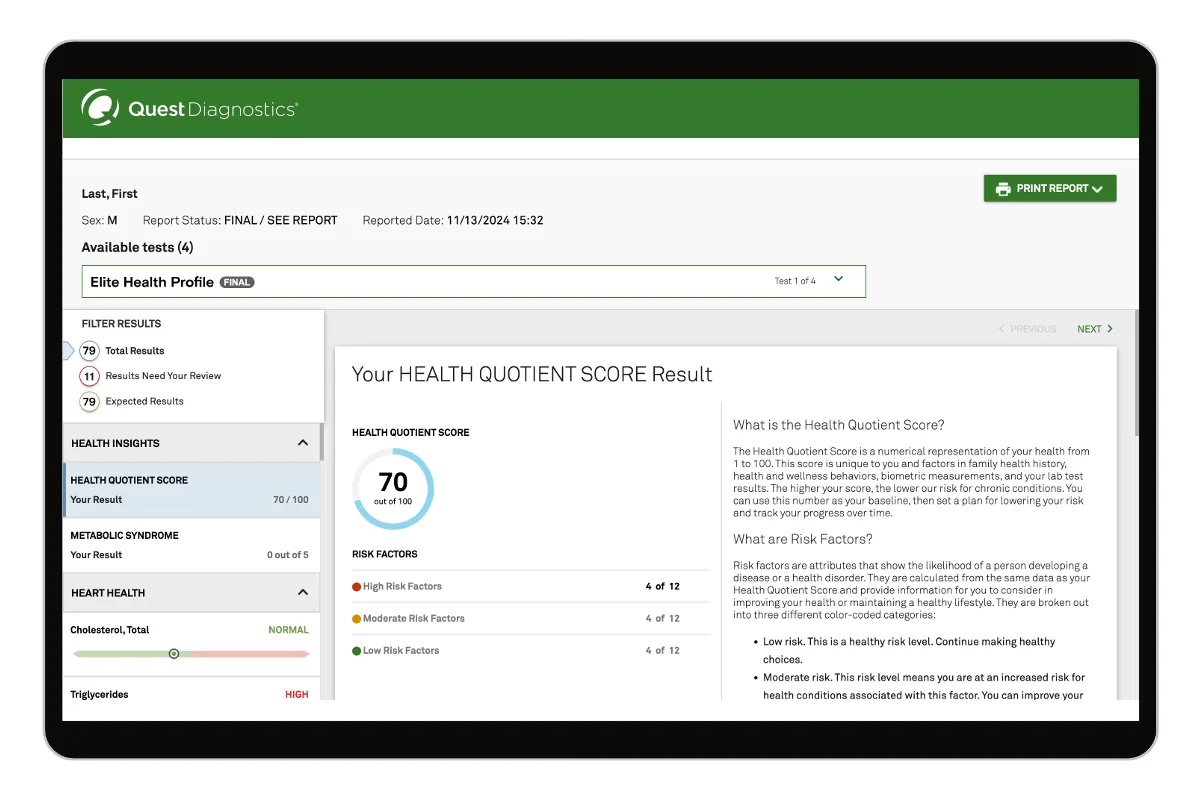
The Elite Health Profile is one blood and urine draw at a Quest center, and nothing renews. Quest lists 85+ markers, including ApoB, insulin, HbA1c, hs-CRP and thyroid markers.

The trade-off

At $405 it's a single snapshot, and every retest costs the same again. Canceling before the draw costs a $20 fee.

More detail and alternatives

It costs $399 plus a $6 physician fee, and results typically arrive in 3 to 5 business days. You don't need a doctor's visit to buy it. A provider licensed in your state approves the order, and you can talk through results with an independent provider at no extra cost.

If you don't give a sample within 60 days, the purchase expires and you get it back minus the same fee. Quest doesn't bill insurance. It can't collect samples in Arizona, Hawaii or Puerto Rico, and home collection costs $79 more where it's offered.

Choose Function Health if you'd test twice in a year anyway. Its $365 first year covers two Quest draws, 100+ tests and then 60+, which is $40 less than one Quest panel. The catch is the membership. It renews at a price Function doesn't state, and refunds end 48 hours after you buy.

Function Membership →
Our low-commitment glucose pick
Abbott Lingo, manufacturer product image
Photo: Abbott

Abbott

Lingo

$54US price, checked

Why this one

$54 buys one Lingo sensor worn for up to 14 days, with full app access and free shipping. It takes a glucose reading every minute. The plan doesn't auto-renew, and a 30-day money-back guarantee covers a first Lingo purchase.

The trade-off

Two weeks is a short look, and the app gives no glucose alerts. Abbott's own footnote says 77.1% of sensors lasted the full 14 days in a study. Faulty ones are replaced free or refunded.

More detail and alternatives

The FDA cleared Lingo in May 2024 as an over-the-counter CGM for adults 18 and older not on insulin. It's the cheapest single order in this guide.

Lingo isn't meant to diagnose disease, including diabetes. Wearing it all year costs about $1,408 at this price, or about $1,082 on the 12-week subscription.

Choose Dexcom Stelo if you want about a month of data in one order. $99 buys two sensors of up to 15 days each, with free shipping. Lingo's 4-week plan is $89 for two 14-day sensors. Stelo's sales are final, with no returns. The FDA said at clearance that it isn't designed to warn you of problematic lows, and Dexcom says 77.9% of sensors lasted the full 15 days in a study.

Dexcom Stelo Glucose Biosensor →Compare side by side →
Our biological-age test pick
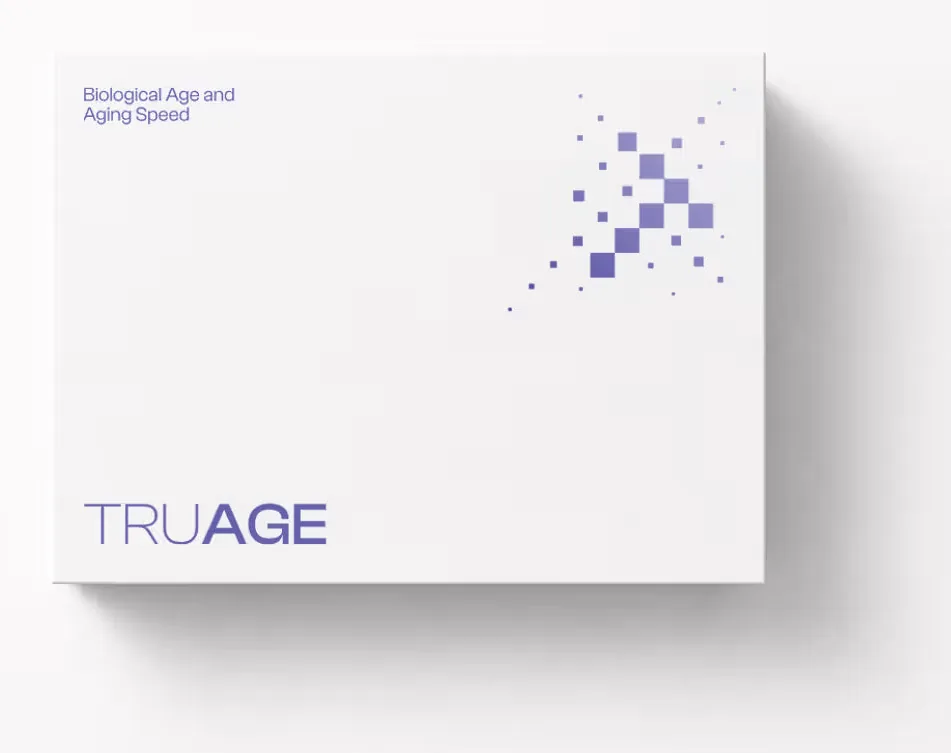
TruDiagnostic TruAge Test, manufacturer product image
Photo: TruDiagnostic

TruDiagnostic

TruAge Test

$499US price, checked

Why this one

TruAge gives the fuller report of the two biological-age kits in this guide. You prick your finger at home and mail a few drops of blood back in a prepaid envelope.

The trade-off

It's $499 a kit, and all sales are final once it ships. If you'll retest, the 4-test annual subscription costs $998 a year. That's about $250 a test, and it's final sale too.

More detail and alternatives

TruDiagnostic reports 75+ biomarkers, including an OMICmAge biological age, a DunedinPACE pace of aging and 11 organ-system ages. It says a CLIA-certified lab runs the test. DunedinPACE's peer-reviewed paper reported test-retest reliability (ICC) of 0.96 in research data.

Results take 3 to 4 weeks after the lab gets the sample. One of OMICmAge's two validation groups was TruDiagnostic's own biobank. In the independent group, it came second to another clock at predicting 5-year mortality. Researchers say there's no agreed way yet to validate aging biomarkers for clinical use, so treat the scores as research measures.

Choose Tally Health's TallyAge if you'd rather swab your cheek than prick your finger. It's $249 with free shipping and a prepaid return label. You get one epigenetic age, and Tally says the test is based on its CheekAge clock, which has a peer-reviewed paper behind it. The catch is noise. Tally says results can swing by about two years between tests and suggests at least five to nine tests to see a trend. Results take 6 to 8 weeks, and Tally doesn't name its lab. It isn't independent of TruAge either. Infinite Epigenetics, the parent of TruAge maker TruDiagnostic, bought Tally in a deal announced April 29, 2026.

TallyAge Test →Compare side by side →

Picks for different needs, not a universal ranking. Prices change, and tax and shipping may be extra.

THE REASONS BEHIND THE PICKS

What matters.
And what doesn't.

Five things decide these picks: what a test measures, how the sample is taken, what a year costs, who reads the results and what you can get back. We don't rank by how many markers a company counts. We don't rank by biological-age or health scores, or by longevity claims, either. Randomized trials of general health checks found little or no effect on deaths. An FDA clearance covers how a glucose monitor measures, not whether wearing one helps. A lab's CLIA certification covers how it runs tests, not whether a test is worth taking.

01Membership or one-off

Function, Superpower and InsideTracker renew every year, and none promises its renewal price. Function charges $365 for the first year. Superpower lists $349 a year, or $599 in New York and New Jersey. InsideTracker's $489 bundle includes one test, and member retests cost $340 each. SiPhox charges per kit, $124 to start plus shipping, as often as monthly. Quest's panel ($405) and a TruAge kit ($499) are one-off buys, but every retest costs the same again. A TallyAge kit is a $249 one-off too. Tally's membership costs $129 a month and includes a test every six months. Wearing a glucose monitor all year costs about $1,022 to $1,408, depending on brand and plan. If you want a dietitian to read your glucose data, Nutrisense's program comes to $2,988 a year at list.

What to checkAdd up the renewal and every retest you plan, not just the first order. Note the date any membership renews.

02How the sample is collected

Function, Superpower, InsideTracker and Quest draw blood at a lab. Function and Quest use Quest centers, InsideTracker most often does, and Superpower uses Labcorp, Quest or another lab. A home draw costs $119 extra at Superpower and InsideTracker, and $79 at Quest. Function sells one in select areas but shows no price. InsideTracker requires the home draw in New York, New Jersey, Rhode Island, Hawaii, Arizona and Canada. SiPhox's kit takes a small sample from your upper arm at home, and its Longevity Essentials panel covers 25 biomarkers. TruAge uses a few drops of finger-prick blood you mail back, and TallyAge a cheek swab sent back with a prepaid label. Lingo and Stelo are sensors you wear on the back of your upper arm.

What to checkIf you won't go to a lab, price the home draw or kit. Then compare what that sample actually tests.

03Measured directly or calculated

Headline counts don't compare well. Function counts lab tests, while Superpower and SiPhox count biomarkers. Superpower's own pages give four different baseline counts, and InsideTracker says up to 54 biomarkers without listing them. Several services also add scores calculated from your results. Examples are Quest's Health Quotient Score, InsideTracker's healthspan scores and Superpower's biological age estimate. TallyAge reports a single epigenetic age, and Tally says results can swing by about two years between tests. TruDiagnostic doesn't say whether its telomere, CRP and IL-6 results are measured or estimated from DNA methylation.

What to checkAsk for the list of what the lab actually measures. Treat scores built from those results as summaries, not extra tests.

04FDA-cleared sensor or lab test

Lingo and Stelo are FDA-cleared devices. The clearance covers how they measure glucose, not any health benefit. Neither the FDA records nor the makers' pages give an accuracy figure such as MARD. Lingo is cleared for adults 18 and older not on insulin. Stelo was cleared for the same group in 2024. In June 2026 the FDA widened Stelo's clearance to anyone 2 or older not on insulin, with an adult caregiver supervising children. None of the lab tests here claims FDA clearance. TruDiagnostic, InsideTracker, Quest and SiPhox say a CLIA-certified lab runs their tests. Tally doesn't name its lab or mention CLIA. Superpower says some of its tests are lab-developed and not cleared or approved by the FDA. Function's pages don't state CLIA or CAP status.

What to checkRead an FDA clearance as a statement about measurement. Look up a named lab in CMS's free QCOR CLIA lookup. SiPhox and Tally don't name their labs, so you can't check them.

05Who reads your results

Function says clinicians review every result and add a summary and action items. Superpower has a care team of physicians, nurse practitioners and pharmacists, and says its concierge replies within one business day. With Quest, a provider licensed in your state approves the order, and you can discuss results with an independent provider at no extra cost. InsideTracker's terms say a clinician may order tests without forming a doctor-patient relationship. It doesn't say whether one reviews results. SiPhox calls itself a wellness-only service. If you want a dietitian to read your glucose data, Nutrisense ships two Stelo sensors a month for $249, with access to 1:1 dietitian video calls. That's $150 more than Dexcom charges for the sensors, and charges aren't refundable. Lingo also offers dietitian visits through Berry Street, and Stelo lists 1:1 calls with a dietitian or nutrition specialist. What you pay for calls depends on your insurance. Nutrisense's first call is free, and Stelo offers one free 30-minute call without coverage.

What to checkAsk who follows up an abnormal result, how and how fast. A score or a glucose trace on its own isn't a diagnosis.

06Your state, and what you can get back

Function isn't offered in Rhode Island, Hawai'i or Puerto Rico. Superpower's FAQ lists nine states it doesn't serve, and its homepage disagrees. SiPhox doesn't serve Hawaii or New York, and Quest can't collect in Arizona, Hawaii or Puerto Rico. Function refunds only within 48 hours and before any sample. Superpower's agreement offers a one-time refund in the first term, though its FAQ says it doesn't refund. InsideTracker may refund within 30 days if the test is unused. Quest refunds before collection, minus a $20 fee. TruAge and SiPhox don't refund once a kit ships, and Stelo's sales are all final. Tally takes back unused kits in their original packaging if you email first, but gives no return window. Lingo's 30-day guarantee covers a first purchase only.

What to checkConfirm your state is served before you pay. Read the refund clause and note when its window closes.

THE FULL LINEUP

All 10 testing reviews.

Filter by price & features →

Alphabetical, not ranked. Each review explains who it suits and what to check.

How these reviews were made. These picks come from company product pages, membership terms, refund policies and help-center articles checked on October 13, 2026, plus FDA records and published studies where they apply. Stelo's June 2026 age expansion comes from the FDA's announcement and 510(k) summary (K260935) of June 12, 2026, and from Dexcom's announcement of June 23, 2026. Stelo's US buy page still said 18 and older when checked. Tally's sale to Infinite Epigenetics, TruDiagnostic's parent company, comes from the April 29, 2026 announcement and a NutraIngredients report that day. Lab claims such as CLIA or CAP status are the companies' own and haven't been checked against CMS or CAP listings. Test counts, turnaround times and sensor-wear figures are the companies' own too.

Our editorial policy →