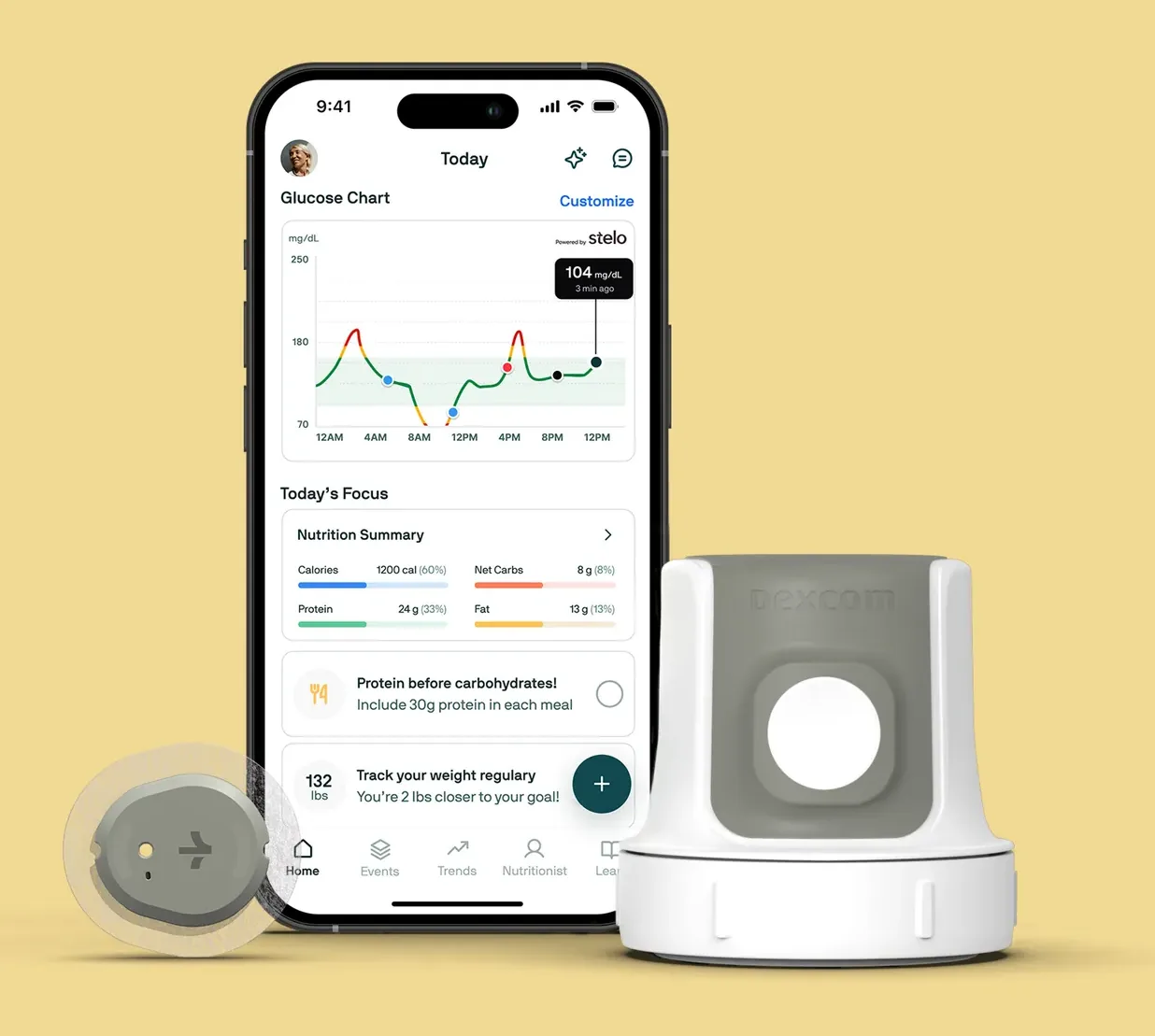
PRODUCT REVIEWS & BUYING GUIDES
US EDITION · USD

Over-the-counter CGM

DexcomStelo Glucose Biosensor

Over-the-counter CGM with 15-day sensors for anyone 2 or older not on insulin

Source-based analysis, not hands-on testing. Our method

Cofounder of Superhuman Chambers · About the author. General information, not medical advice. No independent clinical review is claimed.

The verdict

Stelo is Dexcom's no-prescription CGM, FDA-cleared for anyone 2 or older who doesn't use insulin. The $99 one-time box holds two biosensors of up to 15 days each, about a month of glucose data. The catch: sales are final, it isn't designed to warn you of lows, and year-round wear costs about $1,022 to $1,205 a year depending on the plan.

The trade-off

There are no returns or exchanges, it isn't designed to alert you to problematic lows, and ongoing tracking costs about $1,000 to $1,200 a year depending on the plan.
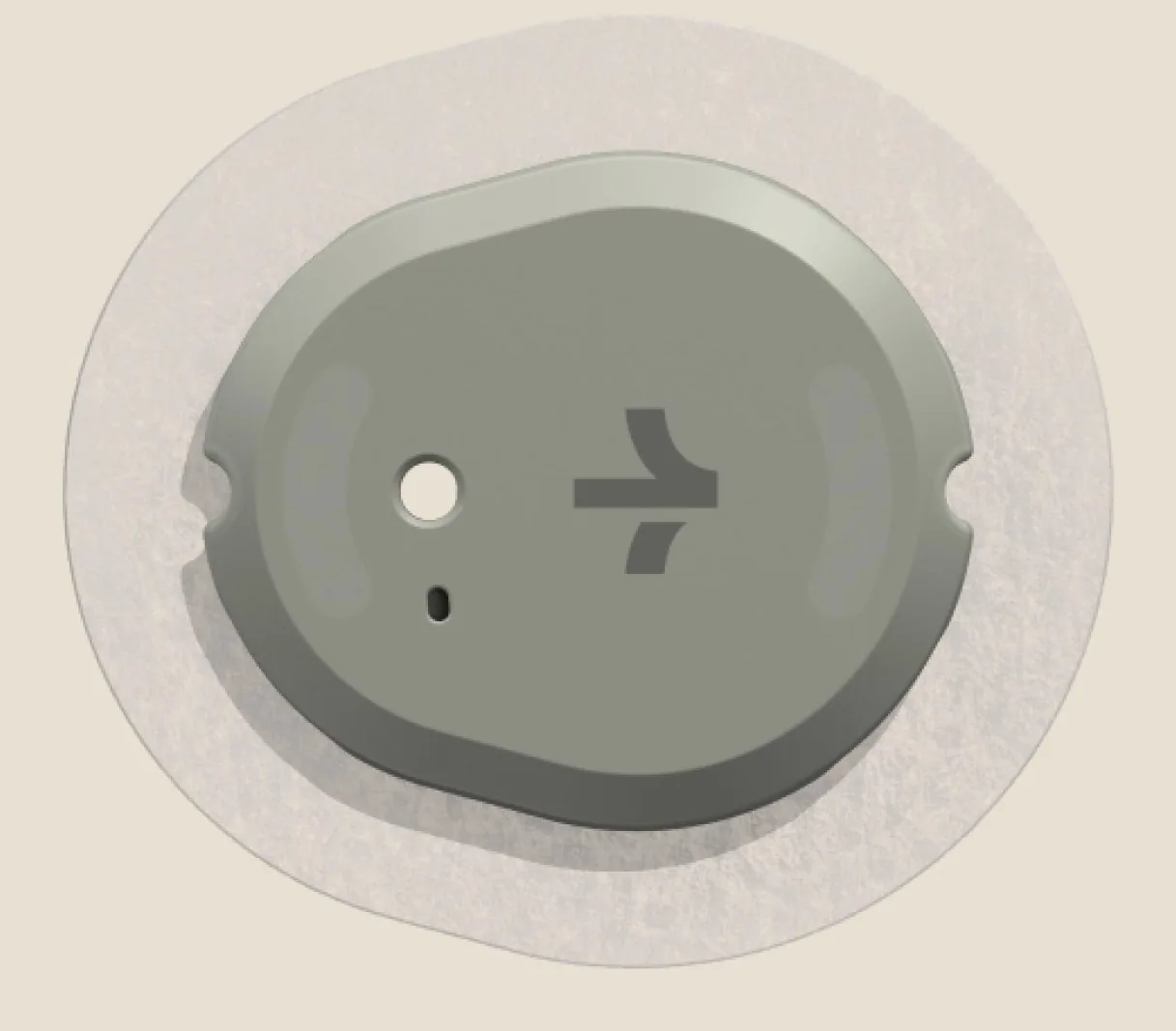
Dexcom Stelo Glucose Biosensor, manufacturer product image
Photo: Dexcom.Source ↗

Model reviewed: One-time purchase: 2 biosensors (up to 15 days each, about 30 days of wear) with applicators, overpatches and the Stelo app

$99

US price, checked

Check price at Dexcom

No affiliate commission on this link. Check the exact variant before buying.

About this price

This is the one-time price on Stelo's US buy page: $99.00, labeled "1-month supply", for 2 biosensors shipped once. There's no commitment, shipping is free, and the price is before tax. It isn't a sale price. The same page offers a monthly subscription at $89 for 2 biosensors, shown against a $99 strikethrough as "SAVE 10%". A 3-month subscription costs $252 for 6 biosensors, shown against $297 as "SAVE 15%". The page headlines its subscriptions as "starting at just $84/month" and lists Stelo as HSA/FSA eligible. The address stelo.com/en-us/buy loads the same page, whose canonical address is the one-time page cited here.

A GOOD FIT FOR

Anyone not on insulin who wants about a month of continuous glucose data, without a prescription, to see how meals and exercise move their numbers.

  • You don't use insulin and want about a month of continuous glucose data without a prescription, for yourself or a child 2 or older
  • You want to pay with HSA or FSA funds, which Stelo's page says it's eligible for

THINK TWICE IF

  • Anyone using insulin, on dialysis or with problematic hypoglycemia
  • Anyone with a history of eating disorders, since the buy page says not to use it
  • Anyone who needs low-glucose alerts, since the FDA said at clearance that Stelo isn't designed to alert users to problematic hypoglycemia
  • Anyone who wants the option to return it, since all sales are final
What still needs checking
  • Stelo's accuracy figures, such as MARD: the FDA said only that it performed similarly to other iCGMs, and the June 2026 510(k) summary gives no figure either
  • How often today's app updates readings: the June 2026 510(k) summary says every 15 minutes, but that predates the redesigned app Dexcom began rolling out in July 2026
  • Whether the redesigned app adds any glucose alerts: the June 2026 510(k) summary says the display gives none, but it predates the July 2026 rollout
  • Whether Stelo's US store has caught up with the June 2026 clearance, since its buy page still says ages 18 and older
  • Where Stelo ships and which payment methods it takes, since those FAQ answers were blank on the buy page
  • The design, size and sponsor of the study behind the 77.9% sensor-survival figure
  • Whether any Stelo app features cost extra beyond the sensors

The practical details.

Specifications for Dexcom Stelo Glucose Biosensor
Exact variantOne-time purchase: 2 biosensors (up to 15 days each, about 30 days of wear) with applicators, overpatches and the Stelo app
Sensor wearUp to 15 days per biosensor, plus a 12-hour buffer after the session ends. Warmup takes 30 minutes
Biosensors per order2 in the one-time box or monthly subscription (about 30 days), 6 in the 3-month subscription (about 90 days)
Subscription cost$89 a month or $252 every 3 months, before tax, and you can pause or cancel anytime
Who it's forAnyone 2 or older who doesn't use insulin, under the FDA's June 2026 clearance, with an adult caregiver supervising children. The buy page still says 18 and older. Not for people on dialysis, with problematic hypoglycemia or with a history of eating disorders, or for anyone changing medication without consulting a healthcare provider
Low-glucose alertsNot designed to alert you to problematic hypoglycemia, the FDA said in March 2024 and again in June 2026. The June 2026 510(k) summary says the display gives no glucose alerts
Phone requirementiOS 18.6 or Android 13 or later
Dietitian callsThe page lists 1:1 video calls with a dietitian or nutrition specialist for every option. Without approved insurance coverage, it offers one 30-minute call at no cost
Water resistanceSubmersible to 8 ft for up to 24 hours when properly applied. Readings may not arrive until you're out of the water
DimensionsThe biosensor measures 24.14 mm wide x 27.4 mm long x 4.72 mm high. Dexcom doesn't publish its weight.
MaterialsDexcom doesn't list materials. It describes the sensor as a small, flexible wire that the applicator inserts under the skin. The wire connects to a transmitter worn with a patch and overpatch. The box holds the applicators, with the biosensors inside, and overpatches.

Before you buy

InstallationNo installation

No installation. Each biosensor comes inside a single-use applicator, and you apply it yourself to the back of your upper arm with the push of a button. Dexcom says to use a new insertion site for each biosensor. A patch and the included overpatch hold it in place. It pairs with the Stelo app after a 30-minute warmup. Your phone needs at least iOS 18.6 or Android 13.

WarrantyDexcom provides the biosensor without warranty, to the extent the law allows…

Dexcom provides the biosensor without warranty, to the extent the law allows, and disclaims implied warranties. Instead there's a replacement program. If a biosensor has an issue before its 15-day wear is up, Dexcom says it will ship a new one at no charge once a technical agent confirms the problem. There's no limit on validated replacements.

ReturnsAll sales are final, with no returns or exchanges

All sales are final, with no returns or exchanges. According to the buy page, you can pause or cancel a subscription anytime.

More about this assessment

Stelo is Dexcom's over-the-counter continuous glucose monitor, so you don't need a prescription. It's FDA-cleared for anyone 2 or older who doesn't use insulin, but Stelo's buy page still says 18 and older. The one-time box costs $99 and holds 2 biosensors, about a month of readings. Wearing it year-round costs about $1,022 to $1,205 a year, depending on the plan. The FDA says it isn't designed to alert you to problematic hypoglycemia. All sales are final, with no returns or exchanges.

Strengths on paper

  • No prescription needed, and FDA-cleared for anyone 2 or older not on insulin (adults only until June 2026)
  • Each biosensor lasts up to 15 days plus a 12-hour buffer, so one $99 box covers about a month
  • Free shipping and HSA/FSA eligibility
  • Subscriptions you can pause or cancel anytime
  • Submersible to 8 ft for up to 24 hours when properly applied
  • Free replacements for sensors that fail early, once a technical agent confirms the issue, with no stated limit on validated replacements

Limitations

  • All sales are final, with no returns or exchanges
  • No warranty beyond the replacement program
  • Not designed to alert you to low glucose
  • Not for insulin users, people on dialysis or people with problematic hypoglycemia
  • Days 11 to 15 of wear weren't directly studied in children, and the June 2026 510(k) summary says their sensor survival is likely lower than adults'
  • In a study footnoted on the buy page, 77.9% of sensors lasted the full 15 days, so about 22% didn't (Dexcom rounds this to "approximately 20%")
  • Dexcom adds that "10% of these sensors may last less than 12 days" but doesn't say whether that's 10% of all sensors or only those that end early
  • Needs a recent phone: iOS 18.6 or Android 13 or later
  • The buy page lists the sensor as MR unsafe, so it has to come off before an MRI, CT scan or diathermy
  • Year-round wear costs about $1,205 a year at the one-time price, or about $1,022 on the 3-month plan

What it costs to own.

Adjust the assumptions for your use. Missing costs stay unknown.

PLAN YOUR OWNERSHIP COSTS

What will it cost to own?

Change the assumptions to fit your use. Leave an unknown cost blank. Add water, subscriptions, cleaning, shipping and taxes if they apply. Use average operating power, not the maximum rating.

3-year planning total

$3,712.50

Every field has a value. This is an estimate, not a quote.

Energy component: $0.00

Purchase + installation + years × (annual consumables + annual other) + watts/1000 × hours/day × 365 × years × $/kWh. Annualized allowances, not an exact replacement schedule. Excludes taxes, shipping, finance and resale unless entered.
Replacement parts & cost assumptions

Recorded recurring parts and refills:

  • Stelo 2-biosensor box (one-time purchase): $99 every 0.99 months. Two biosensors of up to 15 days each cover about 30 days (about 0.99 months) of continuous wear. The one-time price is $99 with free shipping, before tax. The $89 monthly subscription ships the same 2 biosensors.
  • The yearly sensor cost assumes you wear Stelo all year at the one-time price. Each $99 box holds 2 biosensors of up to 15 days, about 30 days of wear. That's 365 / 30 x $99 = $1,204.50 a year before tax, and shipping is free.
  • The three-year estimate (about $3,713) counts the first $99 box as the purchase, then adds three full years of refills. That's about one box more than 1,095 days of wear would need. A single month of Stelo costs $99.
  • Subscribing lowers the yearly cost. The $252 3-month plan (6 biosensors, about 90 days) works out to 365 / 90 x $252 = about $1,022 a year. The $89 monthly plan comes to 365 / 30 x $89 = about $1,083 a year.
  • Dexcom replaces sensors that fail before 15 days at no charge once a technical agent confirms the issue, so the estimate adds nothing for early failures. The biosensor has no charger or mains power, so its power draw and daily hours count as 0.

Evidence & sources.

Are longevity blood tests and biological-age clocks worth it? Our evidence review grades the research as Not supported. That grade is about the claim, not about this product.

  • Manufacturer claimPrice, box contents, sensor wear time, size, water resistance, phone requirements, warnings and the no-returns policy all come from Dexcom's buy page. The age eligibility comes from the FDA's June 2026 clearance instead, since the buy page still says 18 and older.1 Not independent testing.
  • Regulator recordOn March 5, 2024, the FDA announced it had cleared the Dexcom Stelo Glucose Biosensor System, an integrated CGM (iCGM), as the first over-the-counter CGM. At the time, it was cleared for anyone 18 and older who doesn't use insulin. That includes people with diabetes on oral medications and people without diabetes who want to see how diet and exercise affect their blood sugar. The FDA said the device performed similarly to other iCGMs in a clinical study provided to the agency.2 The announcement gives no accuracy figures and no 510(k) number. Reported adverse events were local infection, skin irritation and pain or discomfort. The FDA says Stelo isn't for people with problematic hypoglycemia and isn't designed to alert users to it. It also says users shouldn't make medical decisions from its output without talking to their healthcare provider.
  • Regulator recordOn June 12, 2026, the FDA announced it had cleared Stelo for people 2 and older who don't use insulin. That includes children with diabetes who take oral medication. The FDA says children should use it under an adult caregiver's supervision. Dexcom announced the change on June 23, 2026.35 The 510(k) number is K260935. Its summary says pediatric data for wear days 1 to 10 met the iCGM special controls, and it gives no MARD. Days 11 to 15 weren't directly studied in children aged 2 to 17, and the summary says their sensor survival is likely lower than adults'. It also says the display gives no glucose alerts and shows data every 15 minutes.
  • Manufacturer claimIn a study footnoted on the buy page, 77.9% of Stelo sensors lasted the full 15 days. The footnote says approximately 20% of sensors may not last the full 15 days and that "10% of these sensors may last less than 12 days."1 This is Dexcom's own figure. If 77.9% lasted 15 days, about 22% didn't, which Dexcom rounds to approximately 20%. The footnote doesn't say whether the 10% refers to all sensors or only those that end early. The page doesn't give the study's design, size or sponsor.
Sources (5)
  1. Stelo Glucose Biosensor: one-time purchase Dexcom · manufacturer · checked Oct 13, 2026
  2. FDA Clears First Over-the-Counter Continuous Glucose Monitor U.S. Food and Drug Administration · regulator · checked Oct 13, 2026
  3. FDA Clears First Over-the-Counter Continuous Glucose Monitor for Children U.S. Food and Drug Administration · regulator · checked Oct 13, 2026
  4. 510(k) summary K260935: Stelo Glucose Biosensor System U.S. Food and Drug Administration · regulator · checked Oct 13, 2026
  5. Dexcom Further Advances Vision of Glucose Biosensing for All Dexcom · manufacturer · checked Oct 13, 2026

Is a CGM worth it if you don't have diabetes? What the evidence shows →

About this review. The facts on this page come from manufacturer pages and regulator records, checked Oct 13, 2026. The sources are listed above.

Our editorial policy →