THE REASONS BEHIND THE PICKS
What matters.
And what doesn't.
Six things decide these picks: where the light goes, coverage, checkable output, FDA status, what's in the box and return costs. We don't rank by LED counts or wavelength lists, because neither tells you the dose. A consumer solar meter isn't a lab instrument. On one, Mito lists over 130 mW/cm² for the 300X at 6 in, while the lab it paid measured a 38.2 average there. Zero-EMF and flicker-free claims are set aside, because no maker here names the meter and publishes the readings. Makers' skin studies, longevity claims and HSA or FSA badges don't move a pick either.
01A mask or a panel
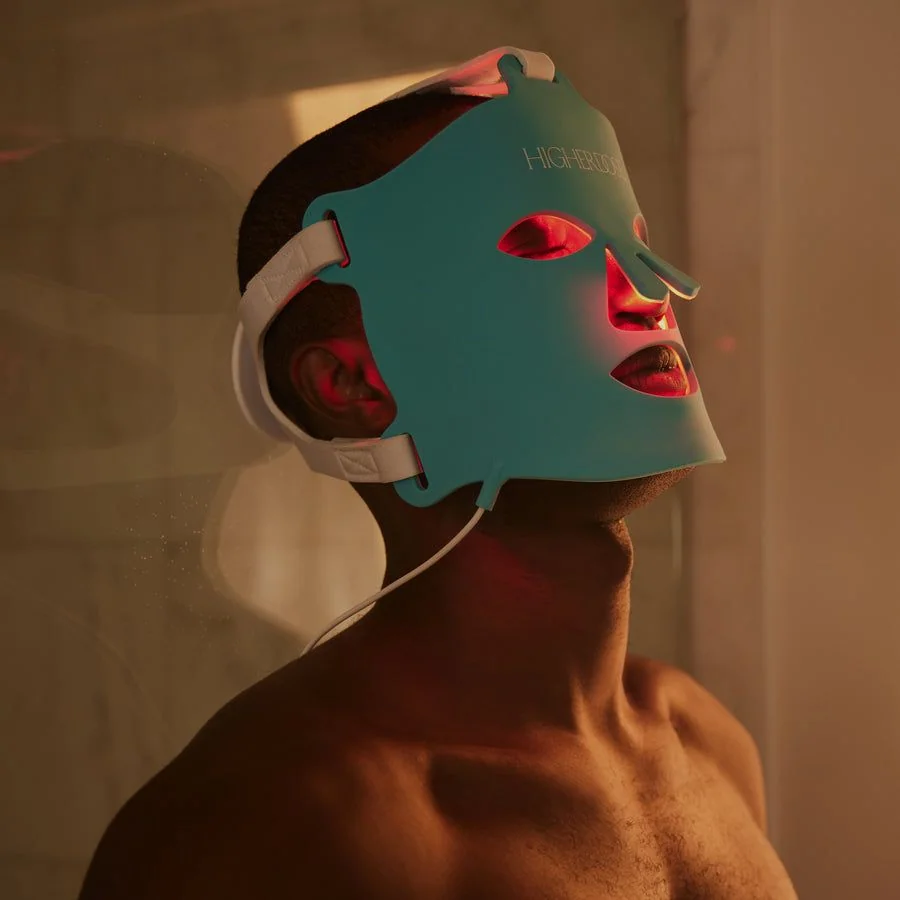
Decide where you want the light before you compare models. A mask covers only your face, but you strap it on and there's nothing to mount. The five masks here cost $349 to $649.99 and run on rechargeable batteries. Sessions run from 3 minutes on the FaceWare Pro to 20 on HigherDOSE's longer session. Four of the five match an FDA clearance for full-face wrinkles. A panel can reach your neck, a joint, your back or your legs. It needs a door, a wall, a table or a stand. The two small panels cost $449 and $659. The full-length ones cost $1,139.99 to $1,699.
What to checkIf it's only your face, a mask does the job with the least setup. If you want your neck or a joint too, look at the small panels. For your back or whole body, you need a full-length panel or several positions.
02How much of you a panel covers
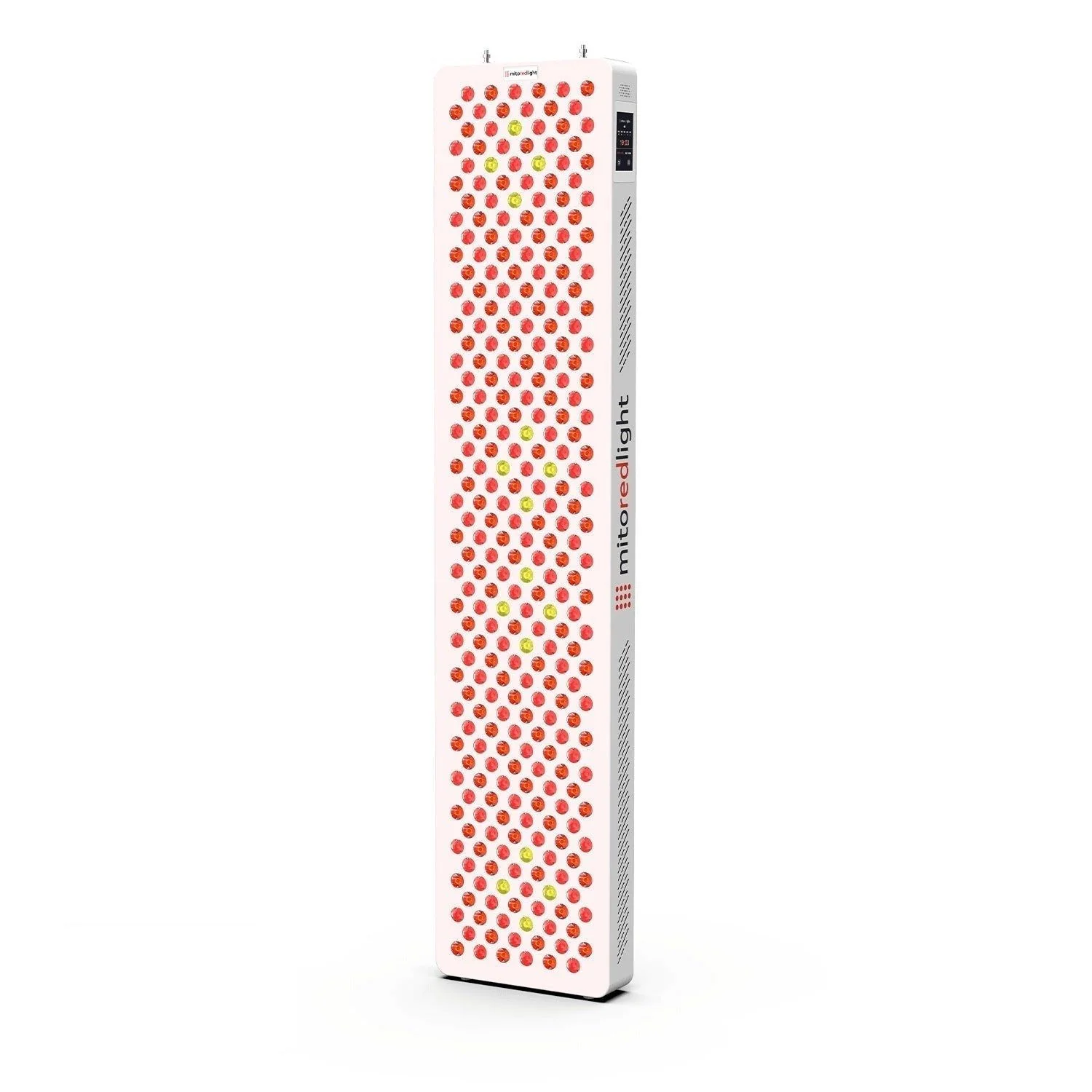
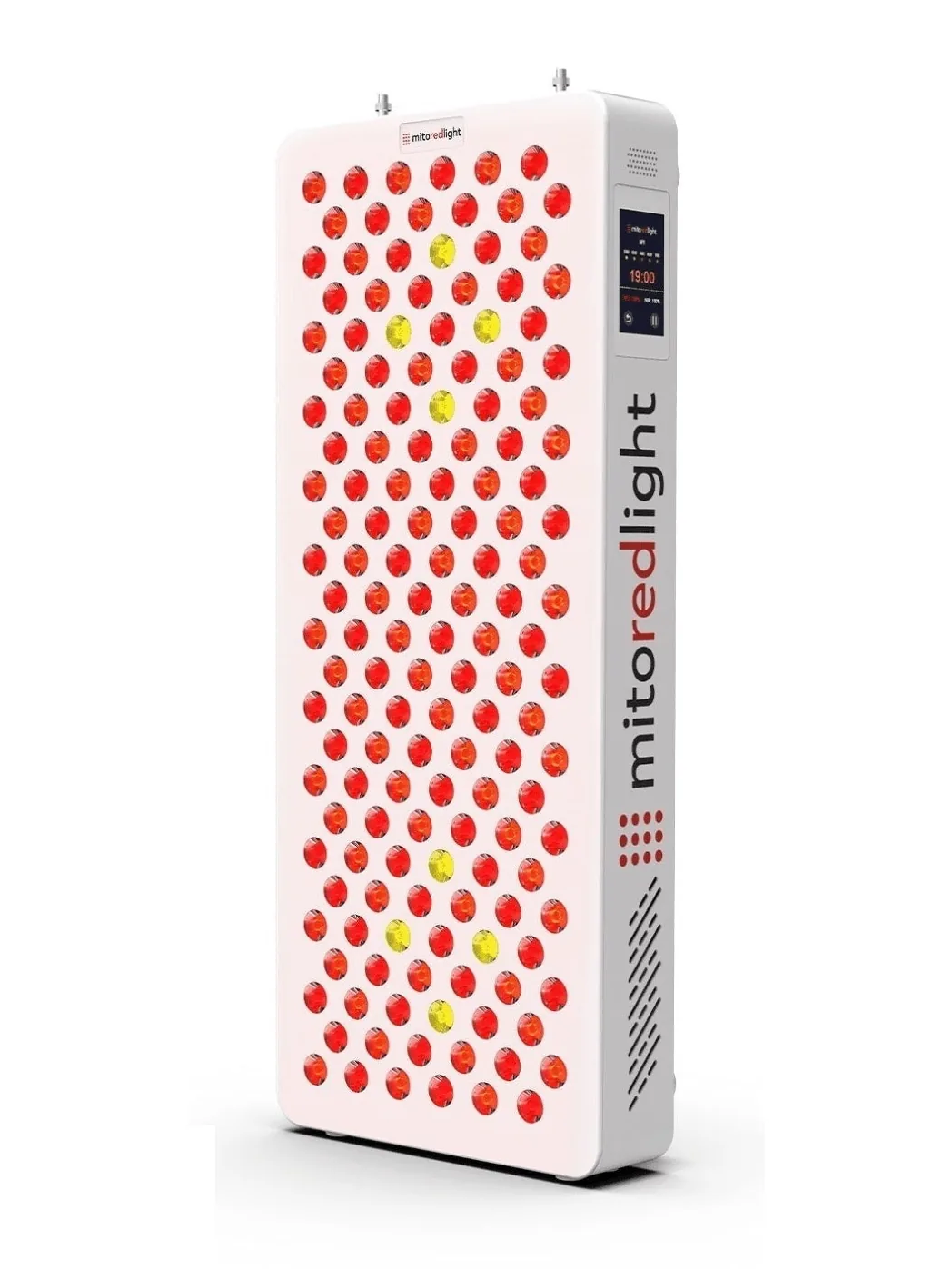
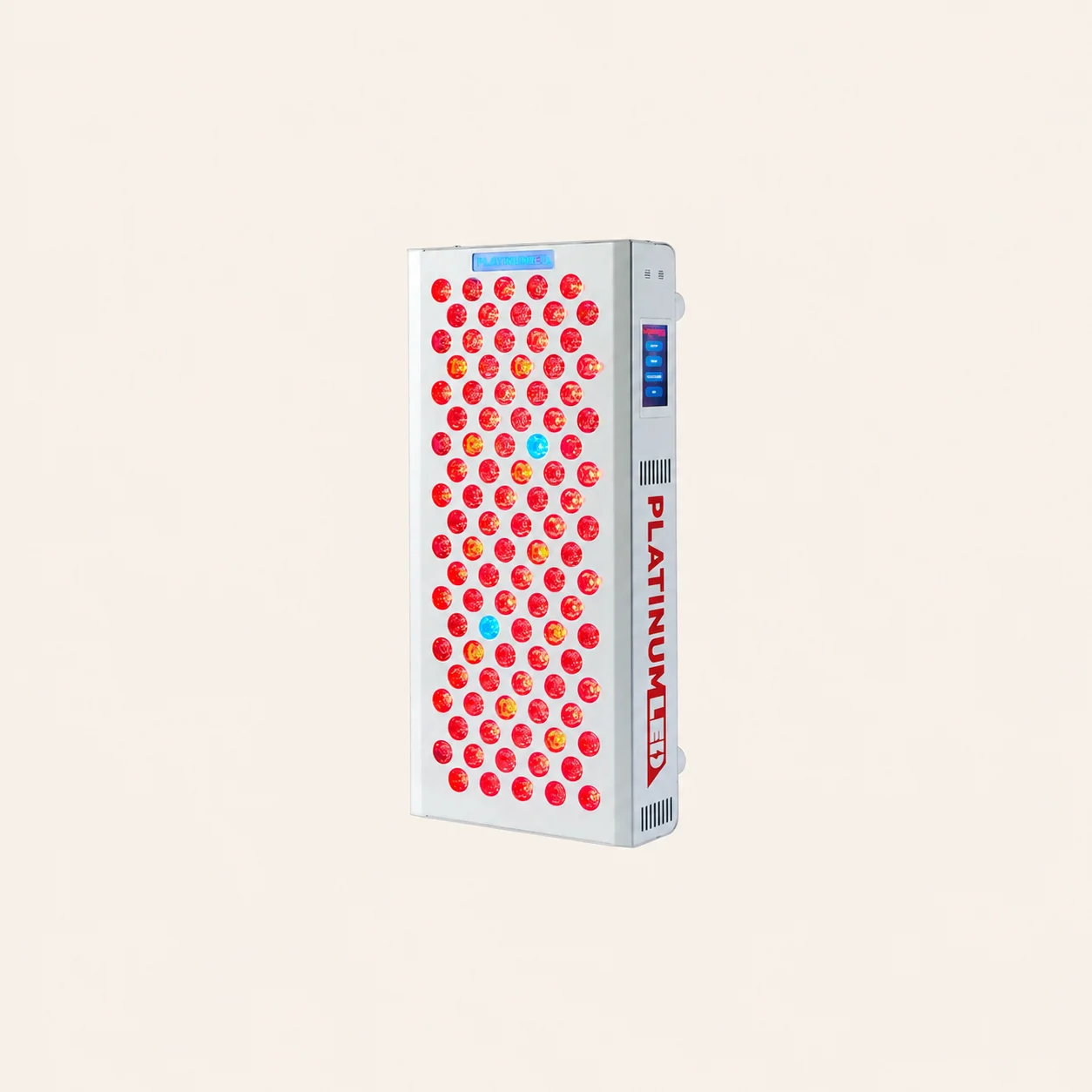
Coverage separates panels more than LED counts do. Mito rates the 1500X, at 10 by 43 in, for full-body sessions. It rates the 750X, at 10 by 23 in, for your upper or lower body. Joovv rates the Solo 3.0 for moderate coverage. PlatinumLED calls the BIOMAX 900 full body, but its own FAQ points to a 2x or 4x package for that. Hooga says the PRO1500 covers 43 by 14 in at 3 in, growing to 60 by 29 in at 18 in. The MitoPRO 300X and BIOMAX 300 are sized for your face, neck or a joint.
What to checkDecide which areas you'll treat in one session, then choose a panel that covers them from one spot. A smaller panel means moving it between areas, or buying a second panel later.
03Output you can check
Irradiance, in mW/cm², is the light power reaching your skin, and it drops as you step back. A figure helps only with a distance and a named meter or lab. The BIOMAX 300's lab report gives a 56.25 mW/cm² average at 12 in. Ten minutes there works out to about 34 J/cm². Mito's lab figures are only at 6 in, half its closest recommended distance. Hooga gives four distances but names no meter or lab. BON CHARGE and Joovv give one figure with no distance. PlatinumLED publishes none for the BIOMAX 900, and the chart under it belongs to a more powerful panel. No mask maker gives a measuring distance.
What to checkAsk the maker for irradiance at your distance and the instrument used. Multiply mW/cm² by your session in seconds and divide by 1,000 to get J/cm². Don't compare a solar-meter reading with a lab figure.
04FDA cleared, listed or neither
Four masks match an FDA 510(k) clearance for full-face wrinkles: CurrentBody Series 2, HigherDOSE, Omnilux and TheraFace. The TheraFace is also cleared for mild to moderate inflammatory acne. None of the four clearances needed a clinical trial, so none proves a mask works. Dr. Dennis Gross calls the FaceWare Pro FDA cleared, but the FDA lists no clearance under its name. We couldn't confirm a clearance for any panel. FDA records list the MitoPRO X series, both BIOMAX panels and the Joovv Solo 3.0 as infrared heating lamps. That Class 2 code is exempt from 510(k) review. Kala shows an "FDA Cleared" badge, but the FDA record found for a "KALA Elite" is the same kind of lamp listing.
What to checkAsk for the 510(k) number and read the cleared use in FDA's database. "FDA registered" on a panel isn't a clearance. For electrical safety, look in the certifier's own directory. Intertek's lists the MitoPRO 1500X and 300X. Hooga says its finished panel isn't UL or ETL listed.
05What's in the box, and what isn't
With red light, the price is most of what you'll pay. No mask or panel here lists a bulb, filter, refill or subscription. The extras are mounting and returns. The MitoPRO 1500X and 750X, Hooga, BON CHARGE and both BIOMAX panels come with a door hook or mount. The MitoPRO 300X comes with a tabletop stand. Kala includes a hanging kit but doesn't say what it hangs from, and Joovv lists no box contents. Stands cost extra: $139 or $349 from Mito, and $119 for the BIOMAX 300's tabletop stand. Kala's stand setups cost $310 to $610 more than the hanging kit.
What to checkFind the door or wall before you order, and make sure it can take a full-length panel of 21 to 33 lb. Mito, Hooga, BON CHARGE and Kala publish no weight rating for their hanging hardware.
06Warranty and what a return costs
Warranties run three years on the Hooga, Mito and PlatinumLED panels, two on Joovv and Kala, and one on BON CHARGE. Omnilux and CurrentBody cover their masks for two years, and the other three makers for one. Returns differ more. HigherDOSE takes a mask back within 120 days, even used. CurrentBody takes back only an unopened mask, unless your skin reacts to its patch test. Mito charges no restocking fee, but you pay return shipping without its optional protection. PlatinumLED keeps 20%, or $259.80 on a BIOMAX 900, plus shipping. Hooga takes return shipping out of your refund. It says open-box items can't be refunded but doesn't say whether that covers a panel you've unboxed.
What to checkWork out the return cost in dollars before you order, including shipping on a heavy panel. Ask who pays shipping on a warranty claim. BON CHARGE and Hooga leave it to you, and so does Mito after 180 days.