THE REASONS BEHIND THE PICKS
What matters.
And what doesn't.
The picks start with what a filter is shown to remove and whether a certifier's listing confirms it. Then come fit, output, drain water, your water, filter costs, warranty and power. None of the picks has a lead or PFAS claim we could confirm in a certifier's directory. The only NSF listings we found for systems here cover neither: the Clearly Filtered pitcher for chlorine, taste and odor, and iSpring's RO500AK-BN for TDS. So we favor makers that name a certifier and publish a result for each contaminant, as Aquasana and AquaTru do. Headline counts don't move a pick. Clearly Filtered's product page says 386+ contaminants, while the FAQ on the same page says 365+. A logo without a listing doesn't count, and neither does a materials certificate such as NSF/ANSI 372. A TDS readout on a faucet isn't a safety test. Output, flow and filter life are the makers' own ratings, not measurements.
01What it's shown to remove
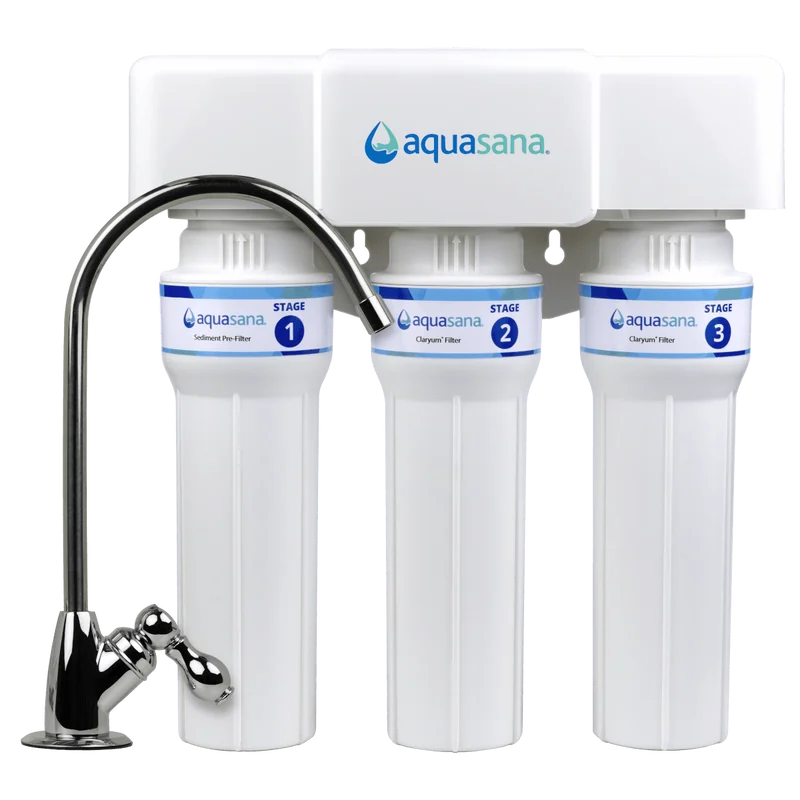
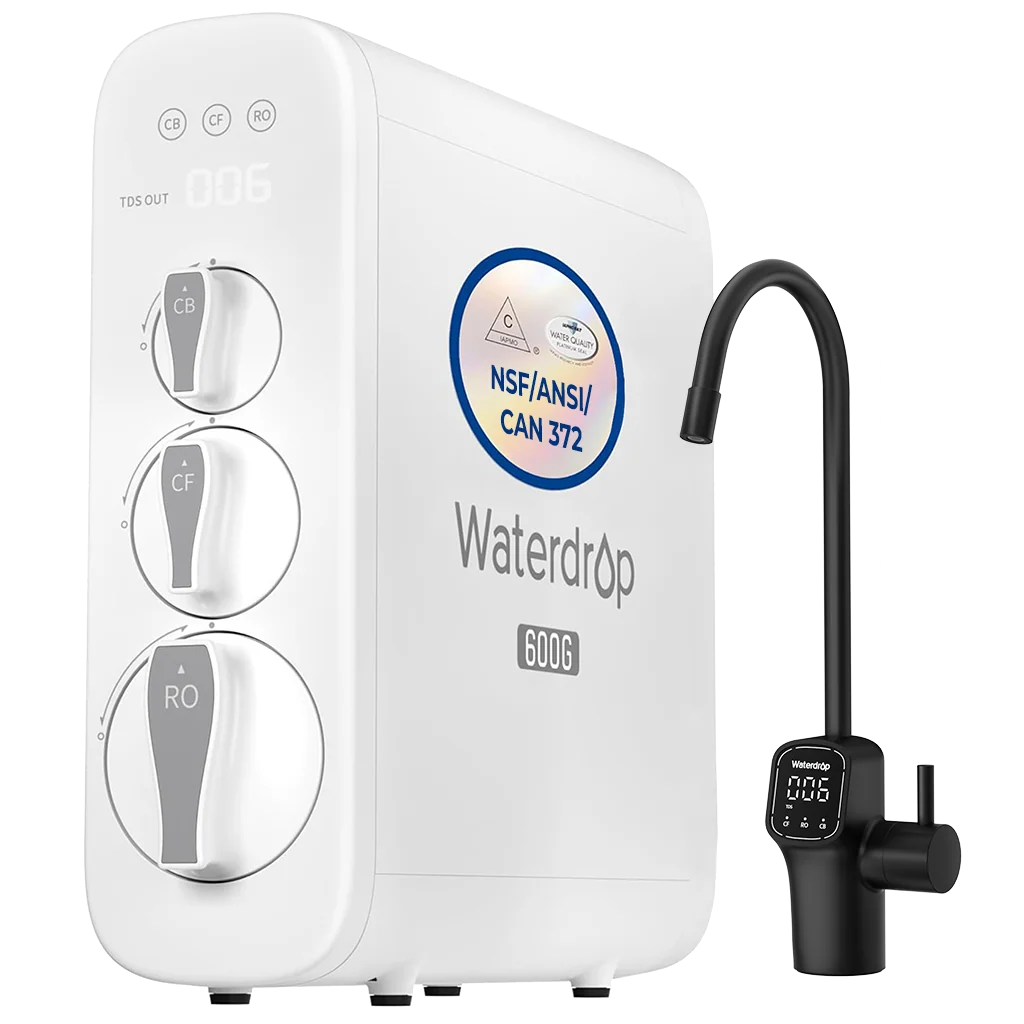
A certification covers named contaminants, one claim at a time. NSF lists the Clearly Filtered pitcher only under NSF/ANSI 42, for chlorine, taste and odor. Its lead, PFAS and fluoride figures come from lab tests Clearly Filtered publishes, which isn't certification. Aquasana says WQA certified the Claryum Max Flow under NSF/ANSI 42, 53 and 401. AquaTru's data sheet names IAPMO R&T for the Classic. WQA's database blocked access and IAPMO's couldn't be searched, so both listings are unconfirmed. NSF's database has no APEC listing, and none for Waterdrop's G3P600 or G3P800. It does list iSpring's RO500AK-BN, but only for TDS reduction. The one certificate Waterdrop shows for the G3P600, under NSF/ANSI 372, covers lead in the parts, not what the filter removes.
What to checkFind the contaminant you care about in your water report, then look up the exact model in the certifier's own directory. The listing should name that contaminant and the standard. For PFAS, EPA points to NSF/ANSI 53 or 58. Those claims promise results below 20 ppt in testing, not EPA's 4.0 ppt limits.
02Pitcher, countertop, one tap or every tap
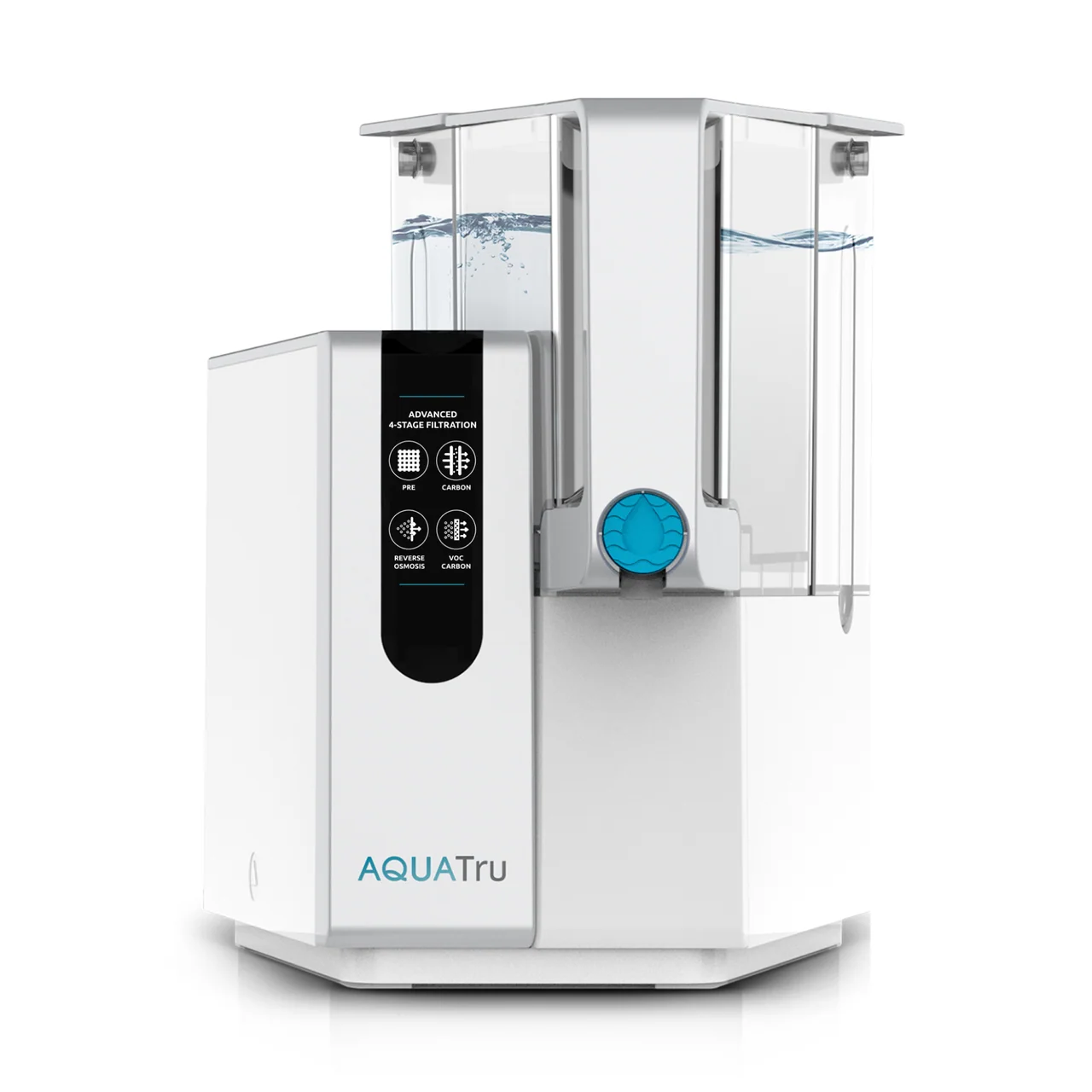
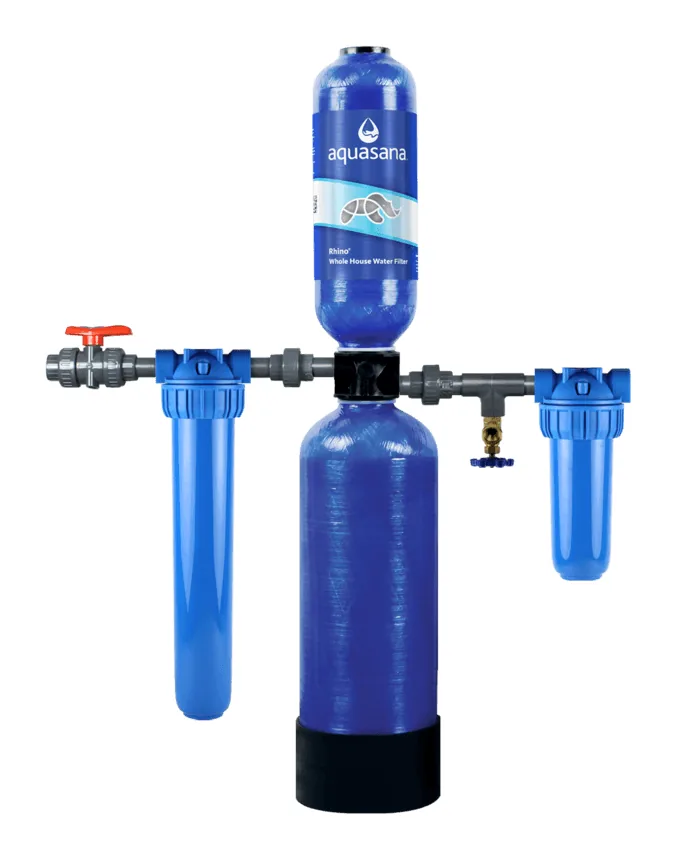
Where you want filtered water decides the work involved. A pitcher needs only a tap. The Clearly Filtered holds 80 oz and stands 10.87 in tall. The AquaTru Classic needs a 120 V outlet and a 12 by 14 in spot, with no plumbing, and the Carafe needs 7.5 by 14 in. The under-sink picks tap the cold-water line and feed their own faucet. The Waterdrop WD-10UA instead feeds the faucet you already have. Under-sink reverse osmosis also needs a drain, and the Waterdrop systems need an outlet. For the APEC, you drill a 1/2 in faucet hole and a 1/4 in hole in the drain pipe. Whole-house filters go on the main line. Aquasana strongly recommends a licensed plumber for the Rhino, and none of the four whole-house makers prices installation.
What to checkLook under the sink for a spare faucet hole, a drain and an outlet before you order. The Claryum can use a sprayer or soap-dispenser hole. For a whole-house filter, get a plumber's quote first.
03Reverse osmosis or carbon
On NSF's list, fluoride and nitrate claims appear only on reverse osmosis (RO) systems. RO also takes out minerals. iSpring's RO500AK-BN adds some back, but iSpring doesn't say which or how much. The Claryum is a carbon filter, and Aquasana says it keeps calcium, magnesium and potassium. RO sends water down the drain too. Waterdrop rates the G3P600 at 2:1 pure to drain and the G3P800 at 3:1. APEC doesn't publish a ratio for the ROES-50. Its FAQ puts under-sink systems at about 3 gallons to the drain per gallon of filtered water. The AquaTru Classic keeps its reject water in the tap tank instead. The Carafe is rated at 63% efficiency, so about 37% of the water you pour in is rejected.
What to checkIf your water report shows fluoride or nitrate you want lower, you need RO. For chlorine, lead or PFAS, a carbon filter with the right claim can do the job and keeps the minerals.
04Your water and your pressure
Some filters set limits on the water going in. AquaTru says hardness should stay under 10 grains per gallon, or scale builds on the membrane. Waterdrop's extended-warranty terms call for city water under 750 ppm TDS and 7 grains per gallon of hardness. APEC rates the ROES-50 at 50 gallons a day with 60 psi of pressure. At 50 psi, that falls to 30. Chloramine splits the whole-house filters. Aquasana sends chloramine users to a different Rhino model, and SpringWell is the only maker of the four that claims to reduce it. APEC, Clearly Filtered and SpringWell all warn against using their filters on microbiologically unsafe water. APEC says such water needs disinfection before or after its system.
What to checkLook up your hardness, TDS and pressure, and whether your utility uses chlorine or chloramine. On a well, test for bacteria first. Aquasana says the Rhino needs its UV add-on for bacteria and viruses.
05What filters cost over three years
Replacement cartridges can cost more than the system itself. The Clearly Filtered pitcher is $110. Three years of $65 cartridges add $780. The AquaTru Classic costs $475 upfront but about $130 a year in filters. Over three years it comes to $864.49 before electricity, against $890 for the pitcher. The cheapest to own are the Brita Ultramax at $148.96 and the Waterdrop WD-10UA at $151.96. The APEC ROES-50's filters run about $55 a year, and the SpringWell CF1's sediment cartridges about $46. Most cartridges have a month limit and a gallon limit, and whichever comes first counts. Aquasana's Claryum set lasts 800 gallons or six months, about 4.4 gallons a day. LifeStraw's carbon filter lasts just 40 gallons.
What to checkWork out how many gallons a day you'll filter for drinking and cooking. If that's more than a filter's gallon rating allows, you'll change it sooner and pay more than the yearly figure on the review.
06Warranty, returns and power
Eleven of the 15 carry a one-year warranty, including the APEC, both AquaTrus, the Brita, the Claryum and all three Waterdrop under-sink systems. LifeStraw gives 3 years, but not for breakage or drops, which matters for glass. Clearly Filtered calls its warranty lifetime, but its policy says it ends 24 months after purchase. The Rhino's runs 10 years or 1,000,000 gallons, though you pay labor and shipping on a claim. SpringWell's lifetime warranty ends if you move the CF1. Returns differ more. APEC keeps 10% of an opened, unused unit and 50% of a used one that isn't defective. iSpring keeps 15% of an open-box return. SpringWell won't take back an installed system unless it finds a defect. Power is the other gap. AquaTru gives the Classic's voltage but not its wattage, and Waterdrop doesn't publish either RO system's draw. The Carafe is the exception, at 36 W in use and about 4 W idle.
What to checkWork out the return cost in dollars before you install anything. Ask whether an installed system can go back, since Aquasana's and Waterdrop's policies don't say.