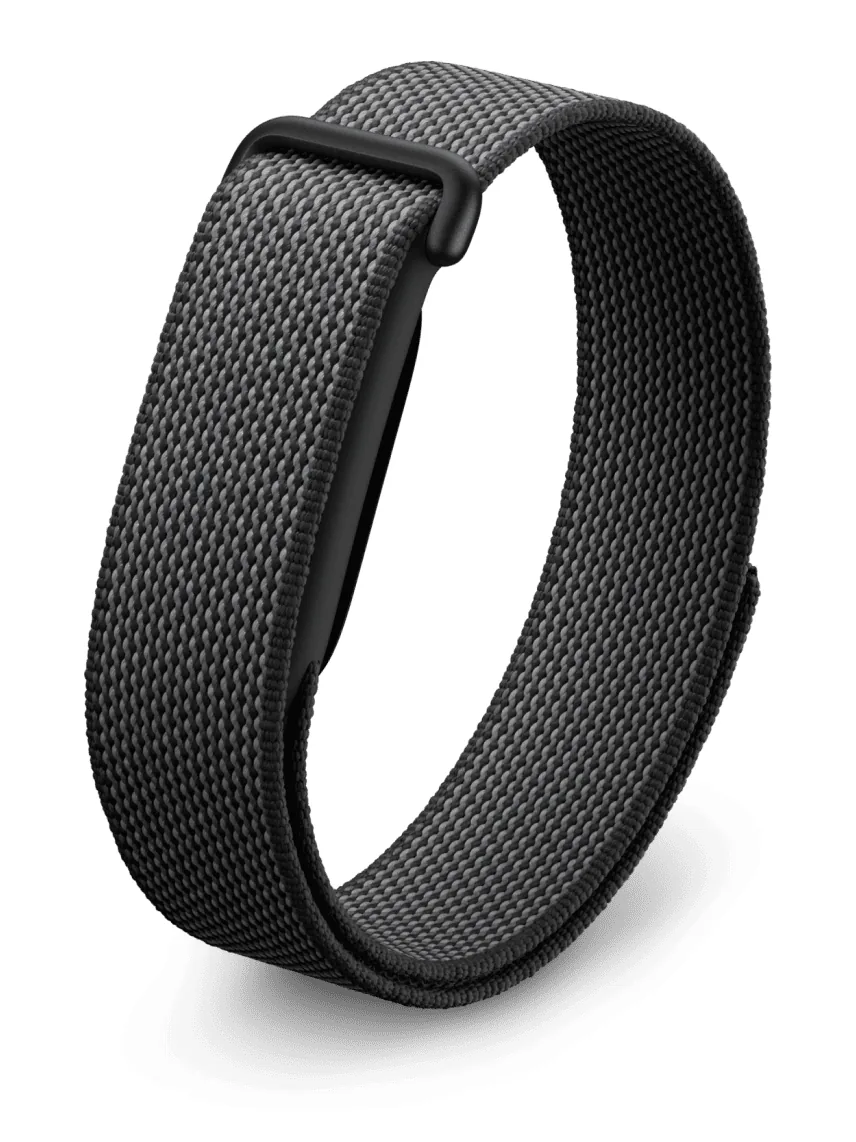
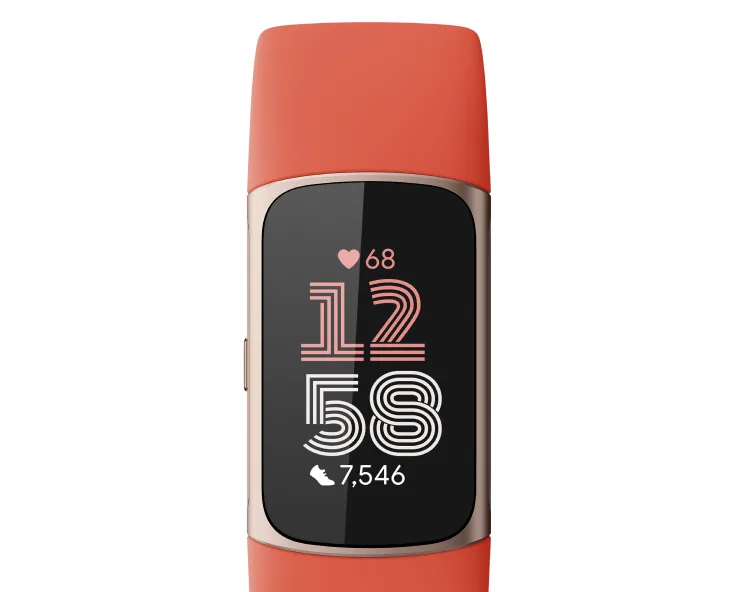
The two side by side
The Fitbit Air is a $99.99 band with no screen. The Charge 6 is a $159.95 tracker with a color screen and built-in GPS. Prices are US prices before tax, checked on Nov 6, 2026. The Charge 6 was on sale for $129.95 that day, so the table gives its list price.
Both use the Google Health app and include 3 months of Google Health Premium (new members only on the Charge 6). For each review, see Google Fitbit Air and Fitbit Charge 6. None of the figures below is evidence of a health effect.
| Question | Google Fitbit Air | Fitbit Charge 6 |
|---|---|---|
| Best for | A screen-free band for sleep and recovery data | A color display and built-in GPS for workouts |
| US price | $99.99 (‘From’ price, before tax)1 | $159.95 list. Google’s page also showed $129.95 on sale when checked Nov 6, with the sale ending Nov 88 |
| Price and where to buy | $99.99US price, checked Check price at Google for Google Fitbit Air | $129.95US price, checked Check price at Google for Google Fitbit Charge 6 |
| Display | None listed. You read everything in the Google Health app2 | AMOLED color display with an optional always-on mode9 |
| GPS | None in its sensor list2 | Built-in GPS and GLONASS9 |
| Size and weight | 12 g with the band. One band size2 | 30 g. Google doesn’t say whether that includes the band. Two band sizes come in the box9 |
| Battery | Up to 7 days. Google publishes no test conditions2 | Up to 7 days, from Google’s mid-2023 testing on pre-production hardware. The always-on display and SpO2 tracking need more frequent charging9 |
| Heart rate and recovery data | 24/7 heart rate, resting heart rate, HRV, breathing rate, blood oxygen and skin temperature variation12 | Heart rate, blood oxygen and skin temperature variation, with more than 40 exercise modes. HRV is not stated on the Google Store pages we checked89 |
| Sleep | Sleep Score with sleep stages, and a Readiness score. Premium adds detailed sleep insights and daily guidance13 | Sleep guidance and the Daily Readiness Score are Premium features. Sleep stages are not stated on the Google Store pages we checked810 |
| Heart rhythm | Irregular Rhythm Notifications listed. Google’s Air pages don’t mention FDA clearance1 | ECG app that Google says lets you assess your heart rhythm for AFib. FDA’s clearance covers Fitbit wrist wearables and doesn’t name Charge 6812 |
| Water resistance | 50 m2 | 50 m9 |
| Premium | 3 months included, then $9.99 a month. A $99 yearly plan was reported by TechCrunch, not Google137 | 3 months included for new members, then $9.99 a month810 |
| Phone | Android 11 or later, or iOS 16.4 or later12 | Android 11 or later, or iOS 16.4 or later9 |
| Returns | 15 days from receipt at the Google Store4 | 15 days from receipt at the Google Store4 |
| Warranty | Google doesn’t publish a length for the Air5 | Google doesn’t publish a length for the Charge 611 |
These links go to each brand’s own store and earn us no commission.
Fitbit Air or Charge 6: which one suits you?
Each suits a different need, and this isn’t a ranking. The split is mostly screen and GPS against price and size.
- For sleep and recovery data: Choose the Fitbit Air if you want sleep, HRV and heart rate tracking for the least money and don’t need a screen. It’s $99.99, weighs 12 g with the band and lists a Sleep Score with sleep stages12. The trade-off: you read everything in the app, its sensor list has no GPS, and Google’s Air pages don’t say its AFib alerts are FDA-cleared12.
- For workouts: Choose the Charge 6 if you want to see your pace and heart rate on your wrist and map a run or ride without your phone. It has built-in GPS, a color display and more than 40 exercise modes89. The trade-off: it’s $159.95 at list price, and its Daily Readiness Score sits behind Premium8.
- For a heart rhythm check: Choose the Charge 6 if you want an ECG app. Google lists one, and FDA cleared the Fitbit ECG App for Fitbit wrist wearables, without naming the Charge 6812. The Air has no ECG app listed.
- If you use an iPhone, both work. Each lists iOS 16.4 or later and Android 11 or later29.
What do they cost over three years, with and without Premium?
Neither has a required fee. Google Health Premium is optional, adds a coach built with Gemini and renews at $9.99 a month after the 3 included months, and you must be 18 or older to enroll31014. Kept for the other 33 months, it adds $329.67. TechCrunch reported a $99 yearly plan in May 2026, which Google’s pages don’t show. If that plan exists and you paid yearly, it would add $2977.
That puts the Air at $99.99 without Premium and $429.66 with it on the monthly plan. The Charge 6 is $159.95 and $489.62. The list-price gap is $59.96, and it stays the same with Premium. Google’s pages differ on what stays free. They list the Air’s Readiness score as free, and mark the Charge 6’s Daily Readiness Score as a Premium feature38. They don’t explain why, so check the app’s free tier before you buy. For every wearable in one table, see what wearables cost over three years.
| Wearable | Upfront price | Three years, no Premium | Three years, Premium kept monthly | Three years, Premium kept yearly |
|---|---|---|---|---|
| Google Fitbit Air | $99.991 | $99.99 | $429.66 | $396.99, reported plan7 |
| Fitbit Charge 6 (list price) | $159.958 | $159.95 | $489.62 | $456.95, reported plan7 |
Battery and charging: 7 days each?
Google rates both at up to 7 days a charge, and the two ratings aren’t directly comparable. For the Air, Google publishes no test conditions. A full charge takes about 90 minutes, and 5 minutes gives about a day. Google suggests charging every few days for tracking without gaps2.
For the Charge 6, Google says its figure comes from mid-2023 testing on pre-production hardware at default settings. A full charge takes about two hours. The always-on display and SpO2 tracking need more frequent charging9. Google doesn’t state how long either battery lasts over the years, and the Charge 6’s isn’t replaceable911.
Which is better for sleep and recovery, and has anyone checked?
Google’s wording differs between the two. For the Air, Google lists resting heart rate, HRV, breathing rate, blood oxygen and skin temperature variation, plus a Sleep Score with sleep stages, a Readiness score and Cardio Load12. For the Charge 6, the pages we read name Cardio Load, blood oxygen and skin temperature variation, and mark the Daily Readiness Score as Premium. Sleep stages and HRV are not stated on the Google Store pages we checked89. We could not confirm either way, and that may be a gap in Google’s wording rather than in the device, so this page doesn’t treat it as a difference. Check Google’s Charge 6 help pages before you rely on it. On the Air, Premium also adds detailed sleep insights and daily guidance3.
We found no independent accuracy study of either device. A 2025 sleep-lab study of six wrist devices tested the Fitbit Charge 5, an earlier model. Its sleep-stage agreement with polysomnography was moderate (kappa 0.41), and it identified about 48% of wake epochs13. That doesn’t tell you how the Air or the Charge 6 performs. Google says heart rate accuracy varies with physiology, placement and movement2.
Because no study covers these models, this page doesn’t rank them on accuracy. Our evidence review covers what studies of other devices show, and how we choose wearables explains how we weigh makers’ claims.
Heart rhythm alerts and FDA status
Google says the Air looks for signs of AFib while you’re still or asleep, and lists Irregular Rhythm Notifications among its Health Guardian alerts1. FDA cleared Fitbit’s Irregular Rhythm Notifications in 2022 as over-the-counter software for adults 22 and older without a known AFib diagnosis. That clearance lists older Fitbit devices, such as Charge 4, and not the Air. Neither Air page says how the feature was tested on this band6.
The Charge 6 has an ECG app that you start yourself. FDA cleared the Fitbit ECG App in 2020 for Fitbit wrist wearables, and in FDA’s summary it detected AFib with 98.7% sensitivity and 100% specificity in 475 people. The clearance doesn’t name the Charge 6, and FDA says the ECG data is for information only and doesn’t replace traditional diagnosis12. Neither device diagnoses anything on its own.
Returns and warranty
Both are covered by the Google Store’s 15-day return window, counted from the day you receive the device. Reset it to factory settings first, and send it back in its original box with all accessories and documentation4. The Charge 6’s Premium trial is canceled with a return4. The Air page advertises free shipping and returns, and Google’s help page doesn’t mention restocking fees for either14.
Google doesn’t publish a warranty length for either. Its older Fitbit terms give one year for new products and exclude accidents, normal wear, cosmetic damage and consumables such as batteries. Fitbit devices bought on or after July 11, 2023 go through the Google Hardware Warranty Center, which doesn’t name either device515. Google’s Charge 6 guide says liquid damage voids the warranty11.
What if you’re not set on Google?
For the Air against WHOOP and Garmin’s screen-free bands, see WHOOP Peak vs Garmin CIRQA vs Google Fitbit Air and WHOOP alternatives with no membership. For the Charge 6 against a Garmin and a Samsung watch, see Fitbit Charge 6 vs Garmin Vivoactive 6 vs Galaxy Watch9.
Sources
- Google Fitbit Air Google Store · manufacturer
- Google Fitbit Air tech specs Google Store · manufacturer
- Google Health Premium with Google Health Coach Google Store · manufacturer
- Return your Google Store purchase Google Store Help · manufacturer
- Fitbit Limited Warranty Google · manufacturer
- 510(k) K212372: Fitbit Irregular Rhythm Notifications US Food and Drug Administration · regulator
- Google's $9.99-per-month AI health coach launches May 19 TechCrunch · news
- Fitbit Charge 6 Tracker Google Store · manufacturer
- Fitbit Charge 6 tech specs Google Store · manufacturer
- Google Health Premium with Google Health Coach Google Store · manufacturer
- Safety, Warranty & Regulatory Guide for Charge 6 Google · manufacturer
- 510(k) K200948: Fitbit ECG App US Food and Drug Administration · regulator
- A performance validation of six commercial wrist-worn wearable sleep-tracking devices for sleep stage scoring compared to polysomnography SLEEP Advances (Schyvens et al.), 2025
- Sign up or manage your Google Health Premium subscription Google Health Help Center · manufacturer
- Google Hardware Warranty Center Google · manufacturer
How this was written. Written from the sources listed above, checked . It is general information, not medical advice. Talk to a clinician before acting on anything here if you have a health condition or take medication.
Our editorial policy →