When is the best time to take creatine?
There is no proven best time. Two randomized trials compared taking creatine before and after training and found no significant difference between the two34. The one trial we read that compared morning and evening dosing used a protein, creatine and glucose blend, so it can’t isolate creatine (see below). The simplest plan is the time of day you will actually remember, every day.
On dose, NIH’s Office of Dietary Supplements (ODS) describes a typical regimen as a 5 to 7 day loading phase and then 3 to 5 g a day1. The International Society of Sports Nutrition (ISSN), a professional society and not a regulator, gives the same maintenance range2. You can skip loading. Taking 3 to 5 g a day raises muscle creatine more slowly, over about 3 to 4 weeks2.
Women, vegetarians and people who take medicines are covered below. Whether creatine works at all is on Does creatine work? What the trials show. To choose a powder, see best creatine supplements. This page is general information, not advice on dosing for a condition.
What do the timing studies show?
Few trials have tested timing. Antonio and Ciccone gave 19 recreational male bodybuilders 5 g of creatine either immediately before or immediately after training for four weeks3. Both groups gained fat-free mass and bench press strength, and the study found no significant difference between them3. The authors’ own magnitude-based analysis leaned toward after training, which is a softer finding than a significant result3.
Dinan and colleagues ran an 8-week, double-blind trial in 34 resistance-trained male and female athletes4. Groups took 5 g of creatine within an hour before training, within an hour after training, or a placebo, each with 25 g of whey isolate and 25 g of maltodextrin4. All three groups improved by similar amounts, and the authors concluded timing added nothing to the measured results4. The placebo group improved too, so a trial this small tells you little about creatine itself.
A 2006 trial gave resistance-trained men a blend of protein, creatine and glucose either around workouts or in the morning and evening for 10 weeks5. The around-workout group gained more lean mass and strength on two of three tests5. Because the supplement was a blend, that result can’t be pinned on creatine’s timing.
| Trial | Who and how long | What was compared | What it found |
|---|---|---|---|
| Antonio and Ciccone, 2013 | 19 male recreational bodybuilders, 4 weeks | 5 g immediately before vs immediately after training | No significant difference between groups3 |
| Dinan et al., 2022 | 34 resistance-trained men and women, 8 weeks | 5 g within 1 hour before or after training, or placebo, each with whey and maltodextrin | Similar gains in all three groups, placebo included4 |
| Cribb and Hayes, 2006 | Resistance-trained men, 10 weeks | A protein, creatine and glucose blend around workouts vs morning and evening | More lean mass and strength around workouts, but the blend isn’t creatine alone5 |
How much creatine a day, and do you need to load?
Loading means taking a higher dose for the first week to fill muscle stores faster. ISSN says the quickest way is about 0.3 g per kg of body weight a day for 5 to 7 days, for example 5 g four times a day2. After that, 3 to 5 g a day maintains the stores2.
Loading is a choice, not a requirement. ISSN describes 3 g a day for 28 days as an alternative that builds stores gradually, with less early effect on exercise performance2. ISSN also says some larger athletes may need 5 to 10 g a day to maintain their stores2. ODS notes that weight gain is the one consistent side effect, up to 1 to 2 kg in a month alongside strength training1.
ISSN concludes that there is no compelling evidence of harm from intakes up to 30 g a day for up to five years in otherwise healthy people2. That is a ceiling from research, not a target. Stomach upset and cramps are among the reactions people report anecdotally1.
| Plan | Amount | How long | Source |
|---|---|---|---|
| Load, then maintain | About 0.3 g per kg of body weight a day (5 g four times a day), then 3 to 5 g a day | 5 to 7 days, then ongoing | ISSN2, ODS1 |
| No load | 3 to 5 g a day | Muscle stores rise over about 3 to 4 weeks | ISSN2 |
| Slower build | 3 g a day | 28 days, then ongoing | ISSN2 |
| Larger athletes | As much as 5 to 10 g a day to maintain stores | Ongoing | ISSN2 |
Should you take creatine with food or water?
ISSN says adding carbohydrate, or carbohydrate and protein, appears to increase how much creatine muscle takes up2. It adds that the effect on performance may not be greater than creatine monohydrate alone2. So food is optional. The label directions in the table at the end are a starting point, and Klean’s data sheet also suggests a carbohydrate-containing drink or food 30 minutes before exercise10.
None of the four makers we reviewed ties water to a result. Their directions give a mixing volume: at least 8 oz for Thorne, 6 to 8 oz for Momentous, 8 oz for Klean and 10 to 12 oz for Transparent Labs811. Where a maker names a time, it is around exercise or any time of day.
What should women know about creatine?
The research is thinner. A 2021 review says evidence for females is understudied6. It reports that females have 70 to 80% lower endogenous creatine stores than males, and that creatine appears effective for strength and exercise performance in premenopausal females6. Two of its authors disclosed advising a creatine maker, and the paper is a narrative review, not a pooled analysis of trials6.
For postmenopausal females, the same review says muscle size and function may improve at a high dose of 0.3 g per kg a day, and bone may benefit when creatine is combined with resistance training6. These are the review’s reading of small studies, not a promise of results. The timing trial by Dinan and colleagues included women, but the abstract doesn’t report timing results separately for them4.
The doses ODS and ISSN give are one range for adults, 3 to 5 g a day, with ISSN’s loading amount set by body weight12.
Pregnancy and breastfeeding are the open questions. ISSN discusses creatine in pregnancy as a research idea, and the outcome data it cites are mostly from animals2. Thorne tells pregnant users to ask a health-care practitioner first, and Klean says to consult a health professional if you are pregnant, nursing, have a health condition or take any medication810. Ask a clinician before you start.
Vegetarians, kidney disease and medicines
Vegetarians have been reported to have lower muscle creatine stores, 90 to 110 mmol/kg of dry muscle, and so may see larger rises in muscle creatine from supplementing2. That is a finding about muscle levels, not a promise of better performance.
ODS advises getting a health care provider’s approval before taking supplements together with prescribed medicines7. The trials summarized on our creatine evidence page were too small to rule out rare harms, and their authors pointed to case reports of kidney impairment. If you have kidney disease, take medicines, or are pregnant or nursing, ask a clinician before you start.
What is one scoop in each creatine we reviewed?
Thorne, Momentous and Klean each sell 5 g of creatine monohydrate a scoop, so one scoop is a maintenance serving810. Transparent Labs’ scoop is 7 g and holds 5 g of creatine with 1.5 g of HMB, so one scoop is also 5 g of creatine11.
A loading week at 4 scoops a day uses 20 to 28 scoops, which is a small slice of a tub. Transparent Labs says not to take extra servings for loading because each scoop also has vitamin D, and its directions give one scoop a day11. Four scoops would also be 6 g of HMB, twice the 3 g a day that ODS calls the most common study dose111.
Three are plain 5 g powders and one is a blend, and this isn’t a ranking. For returns, NSF listings and fine print, see best creatine supplements and Thorne Creatine vs Momentous Creatine. Prices are US one-time prices before tax and shipping, from each maker’s page, read on November 6. The trials above tested creatine as an ingredient, not these brands. To check a tub’s lot against NSF’s list, see are supplements third-party tested.
| Question | Thorne Creatine | Momentous Creatine | Klean Creatine | Transparent Labs Creatine HMB |
|---|---|---|---|---|
| Creatine per scoop | 5 g creatine monohydrate8 | 5 g creatine monohydrate9 | 5 g (approximately) creatine monohydrate10 | 5 g creatine plus 1.5 g HMB, in a 7 g scoop11 |
| Label directions | 1 scoop a day in at least 8 oz. Can be taken 30 to 90 minutes before or after exercise8 | 1 scoop a day in 6 to 8 oz, at any time of day9 | 1 scoop a day in 8 oz, around exercise or with a meal on rest days10 | 1 scoop in 10 to 12 oz of cold water, around your workout or in the morning on rest days11 |
| US price and servings | $44 for 90 servings, about $0.49 a serving8 | $42.99 for 90 servings, about $0.48 a serving9 | $34.50 for about 60 servings, about $0.58 a serving10 | $49.99 for 30 servings, about $1.67 a serving11 |
| A year at 1 scoop a day | About $178 | About $174 | About $210 | About $608 |
| A 5 to 7 day load at 4 scoops a day | About $10 to $14 | About $10 to $13 | About $12 to $16 | Not recommended by the maker: extra servings aren’t advised for loading |
| Reviews | Thorne Creatine | Momentous Creatine | Klean Creatine | Transparent Labs Creatine HMB |
What this page can’t tell you
The timing evidence is three small trials. Two used creatine alone, in 19 and 34 people, and in one of them the placebo group improved as much as the creatine groups; the third used a blend35. The women’s evidence is a narrative review, and two of its authors disclosed ties to a creatine maker6. Dosing for kidney disease, pregnancy or any medical condition is a question for your clinician.
For the grading approach we use on trials, see how we rate evidence. For the wider supplement picture, see the creatine, omega-3, vitamin D and magnesium evidence review and the supplements buying guide. Magnesium is compared on cost per 200 mg in best magnesium glycinate supplements.
Products in this guide
Compare the specs side by side →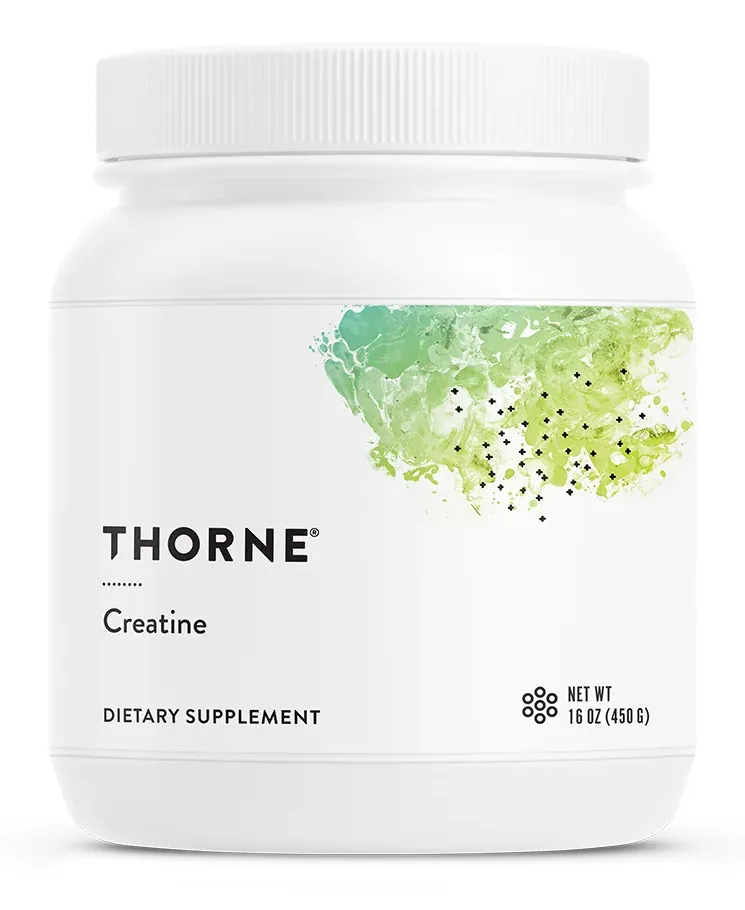

These links go to each brand’s own store and earn us no commission. Prices are dated US snapshots.
Sources
- Dietary Supplements for Exercise and Athletic Performance: Fact Sheet for Health Professionals NIH Office of Dietary Supplements · regulator
- International Society of Sports Nutrition position stand: safety and efficacy of creatine supplementation in exercise, sport, and medicine Journal of the International Society of Sports Nutrition, 2017 · guideline
- The effects of pre versus post workout supplementation of creatine monohydrate on body composition and strength Journal of the International Society of Sports Nutrition, 2013 · randomized trial
- Effects of creatine monohydrate timing on resistance training adaptations and body composition after 8 weeks in male and female collegiate athletes Frontiers in Sports and Active Living, 2022 · randomized trial
- Effects of supplement timing and resistance exercise on skeletal muscle hypertrophy Medicine & Science in Sports & Exercise, 2006 · randomized trial
- Creatine supplementation in women's health: a lifespan perspective Nutrients, 2021
- Dietary Supplements: What You Need to Know NIH Office of Dietary Supplements · regulator
- Creatine - 90 Servings (SF903) Thorne, 2026 · manufacturer
- Creatine Monohydrate Powder (90 Servings) Momentous, 2026 · manufacturer
- Klean Creatine product data sheet (March 2022) Klean Athlete, 2022 · manufacturer
- Creatine HMB product description, directions and FAQs Transparent Labs, 2026 · manufacturer · price read from the store’s product data
How this was written. Written from the sources listed above, checked . It is general information, not medical advice. Talk to a clinician before acting on anything here if you have a health condition or take medication.
Our editorial policy →