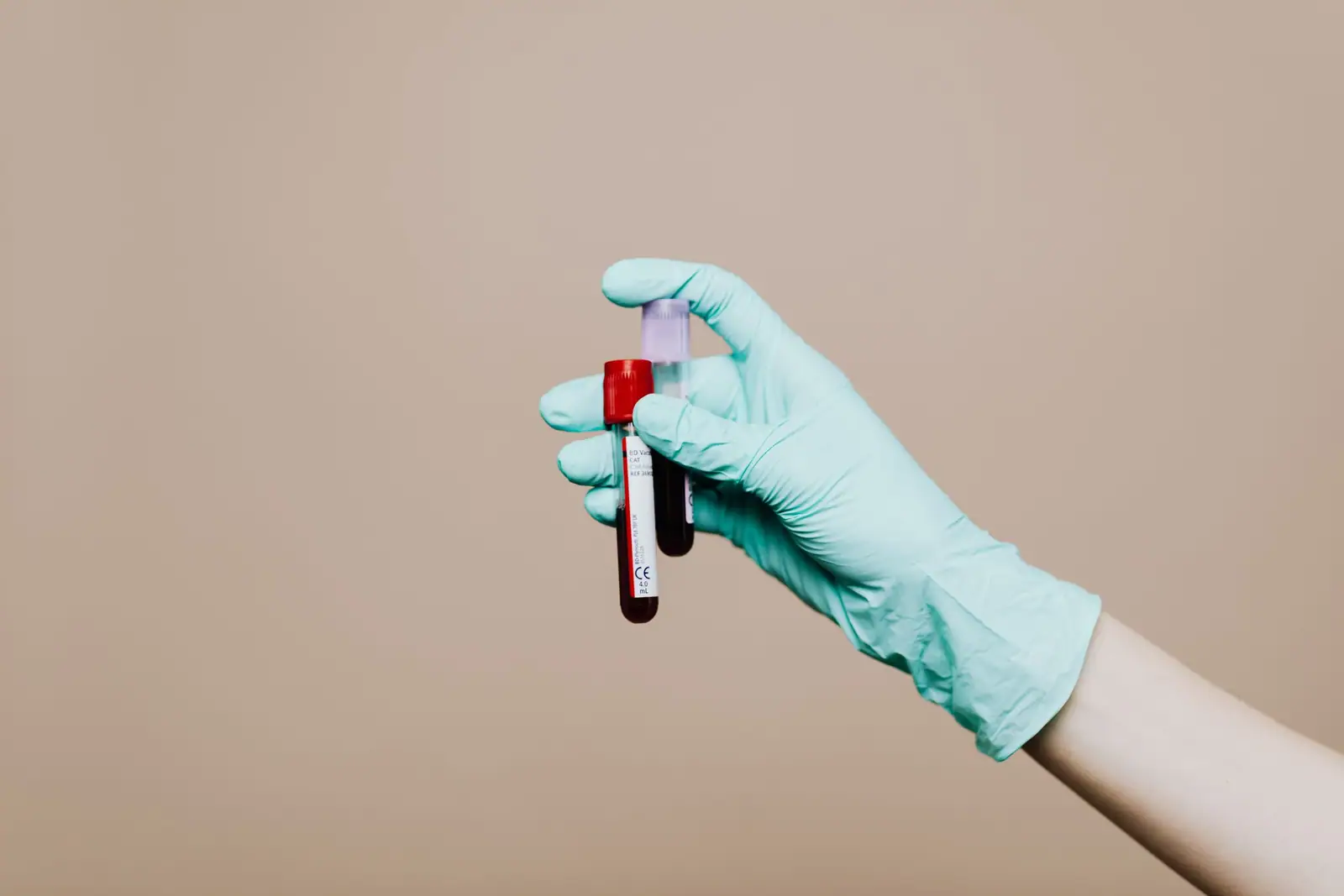
What is a biological age test?
Most biological age tests read chemical tags on your DNA, called methylation, and turn the pattern into a number13. Some tests report an age, such as 41 for a 45-year-old. Others report a pace, where 1.0 means one biological year per calendar year3. Either way, the number is a model’s estimate, not a lab value like cholesterol.
Our evidence review of longevity blood tests and biological-age clocks grades them “Not supported” as a way to improve health. We found no trial showing that a clock score helps healthy adults. That is why this page explains what the numbers are and doesn’t tell you which to buy.
We have reviewed two kits that report an epigenetic age. TruDiagnostic’s TruAge is a finger-prick blood kit that was $499 when checked on November 6, 20267. Tally Health’s TallyAge is a cheek swab that was $249 on October 23, but Tally’s test-kit page and shop no longer listed it on October 30910. For a side-by-side of those two, see TruAge vs TallyAge. Tally Health became an affiliate of TruDiagnostic, TruAge’s maker, in April 202619.
We also reviewed GlycanAge, which isn’t a methylation clock. It reads sugar chains (glycans) on IgG antibodies from a finger-prick blood card, and the one-off kit was $499 on November 7, 202622. Superpower’s $199-a-year blood test membership also shows a biological age estimate in its app, and we don’t know which method it uses13.
What do the clocks measure?
Most consumer tests use an epigenetic clock. That is a formula that takes methylation at a set of DNA sites and returns a number. The clocks differ in what they were trained to predict, so two tests can give two different answers for the same person14.
The first widely used clock was Horvath’s 2013 pan-tissue clock. It uses 353 DNA sites and predicts chronological age, not health1. GrimAge, published in 2019, was trained to predict time to death2. DunedinPACE, published in 2022, estimates the pace of aging from a person’s decline across 19 body measures, as tracked in one birth cohort3.
GlycanAge works differently. It doesn’t read methylation. It measures the balance of sugar chains on IgG antibodies, which GlycanAge ties to chronic inflammation22. In a 2014 study of 5,117 people, three IgG glycans explained up to 58% of the variance in chronological age23. That study reports a glycan index, and GlycanAge doesn’t publish how its own score is built. Our GlycanAge review covers the price, lab and refund terms.
| Clock | What the score estimates | How it was built | Source |
|---|---|---|---|
| Horvath pan-tissue clock (2013) | Age in years, from 353 DNA sites | About 8,000 samples from 51 healthy tissues and cell types | Horvath1 |
| GrimAge (2019) | Time to death, built from methylation-based estimates of seven blood proteins and smoking pack-years | Trained on 1,731 Framingham Heart Study participants, then checked in five cohorts | Lu et al.2 |
| DunedinPACE (2022) | Pace of aging: 1.0 is one biological year per calendar year, using 173 DNA sites | Blood from the Dunedin Study, a 1972 to 1973 New Zealand birth cohort | Belsky et al.3 |
| OMICmAge (2026) | A biological age that TruAge reports as its headline score | Built in a Mass General Brigham biobank, checked in TruDiagnostic’s biobank and Generation Scotland | Chen et al.17 |
Blood or cheek swab: does the sample matter?
Yes, because methylation patterns differ by tissue and each clock is trained on one kind of sample. DunedinPACE was built on blood3. Horvath’s clock was built to work across 51 tissue and cell types1. Tally’s CheekAge clock was built from cheek-swab samples12.
Neither kit we reviewed uses spit. TruAge uses a few drops of blood from a finger prick, and TallyAge uses a cheek swab79. A finger-prick sample isn’t the same as a blood draw at a lab. The OMICmAge paper’s TruDiagnostic samples came from finger-prick (capillary) blood, and it doesn’t compare them with draws from a vein17.
The sample also limits the evidence. Tally’s CheekAge clock was linked to earlier death in older adults, but that analysis used blood, not cheek cells20. Four of the six authors are current or former Tally Health employees20. Superpower, by comparison, takes blood at a partner lab, or at home for $119 extra13.
How much does a biological age test cost?
The one-time kits we checked cost $249 and $499. The table shows each price with the date it was read, before tax and shipping. Prices change, so check the maker’s page before you order.
Retesting is where the cost grows. TruDiagnostic says many customers retest every 3 to 6 months, which at $499 a kit is $998 to $1,996 a year7. Its store also lists a yearly subscription of 4 tests for $9988. Tally says a reliable trend takes at least five to nine tests, which at $249 a kit is $1,245 to $2,24111.
| Test | Sample | Price (date checked) | Source |
|---|---|---|---|
| TruDiagnostic TruAge | A few drops of blood from an at-home finger prick | $499 for one kit (Nov 6, 2026). Annual subscription of 4 tests: $998 | 78 |
| Tally Health TallyAge | At-home cheek swab | $249 for one kit (Oct 23, 2026). Not listed on Tally’s shop on Oct 30, 2026 | 910 |
| GlycanAge test | At-home finger-prick blood card | $499 for one kit (Nov 7, 2026). Subscriptions: $400 to $449 a test | 22 |
| Superpower membership | Blood draw at a partner lab | $199 a year, one draw. Includes a biological age estimate in the app; the method isn’t stated (Nov 6, 2026) | 13 |
How accurate and repeatable are biological age tests?
Two different things get called accuracy. One is how closely a clock’s estimate matches your calendar age. The other is repeatability: whether the same person gets the same number twice. Repeatability matters more for a consumer test, because you’re comparing today’s number with next year’s.
A score can be repeatable when one sample is run twice and still move between two samples. A 2026 Aging Cell analysis of 18 clocks found excellent technical reproducibility for most (ICC above 0.9) when samples were rerun5. The ICC runs from 0 to 1, and a value near 1 means repeat readings agree. For blood samples from the same people hours to days apart, pooled ICCs were about 0.4 to 0.7 for most clocks, lower than the rerun figures5.
The data came from public datasets of 16 to 34 people, mostly young adults, not from consumer kits5. A 2022 Nature Aging study compared replicates of the same samples for six clocks and found differences of up to 9 years from technical noise alone4. Versions rebuilt from principal components brought most replicates within 1.5 years of each other4.
| Measure | Reported result | Source |
|---|---|---|
| Horvath clock vs calendar age (test data) | Correlation 0.96, median error 3.6 years | 1 |
| CheekAge vs calendar age (8,045 adults) | Mean absolute error 3.22 years. Repeat swabs from one person differed by a mean of 0.85 years | 12 |
| DunedinPACE, same sample run again (36 people) | ICC 0.96 | 3 |
| OMICmAge, 30 replicates | ICC 0.998 | 17 |
| 18 clocks, repeat blood samples hours to days apart | Pooled ICC about 0.4 to 0.7 for most clocks | 5 |
| Six clocks, replicates of the same samples | Differences up to 9 years from technical noise | 4 |
| TruDiagnostic’s claim for TruAge | 98% test-retest reproducibility; the page doesn’t name the study | 7 |
| Tally’s statement on test-to-test variation | Fluctuations of around two years are normal | 11 |
What can a biological age test not tell you?
A score describes a group pattern, not your diagnosis. In studies, faster DunedinPACE scores were linked to earlier death: the hazard ratio per standard deviation was 1.26 in 771 older men and 1.65 in 2,471 Framingham Offspring participants3. GrimAge was linked to time to death, with a hazard ratio of about 1.10 per year of age acceleration2. These are observational links across groups.
Prediction for one person is weaker. In a study of 1,083 older adults, DunedinPACE was the strongest of 14 biomarkers for death from any cause, yet a three-marker set scored a C-index of 0.63 against 0.65 for the full model, where 0.5 is chance and 1.0 is perfect18. Only 90 of the 1,083 people died18.
The makers say the same. TruDiagnostic’s page for doctors says TruAge isn’t a diagnostic test and works best beside a clinician’s evaluation15. Tally’s terms say its products don’t constitute a diagnostic test19. A 2024 Nature Medicine review says there is no consensus on how biomarkers of aging should be validated before clinical use6.
- It doesn’t diagnose or rule out any disease
- It doesn’t show that changing your habits changed your score, or that a lower score means better health. We found no trial showing that lowering a clock score improves health
- A change of a year or two between two results can be noise: Tally says swings of about two years are normal11
- Scores from different clocks aren’t interchangeable, since the measures agree only weakly14
- Tally’s test-kit page said, as of October 23, that most members lowered their epigenetic age, with no method given9. Tally’s help page says swings of about two years are normal, so small average changes can’t be told from noise11
What to check before you buy one
If you still want a score, check five things first. The list below is what separates one kit from another. For prices, refunds and privacy terms side by side, use the TruAge vs TallyAge comparison. For blood panels and glucose monitors, see the longevity testing guide.
Refunds differ. TruDiagnostic says all sales are final once an order ships, including the annual subscription816. Tally’s terms say membership fees are non-refundable19.
- Which clock the test uses, and whether it names a published paper. Tally’s help center doesn’t say the sold test uses the published CheekAge model unchanged21
- What the score means: an age, a pace or an organ-system score
- The sample type, and whether the clock was built on that tissue
- The lab, including whether it states CLIA certification
- Your plan for retesting, and the cost of the five to nine tests Tally suggests for a trend11
Products in this guide
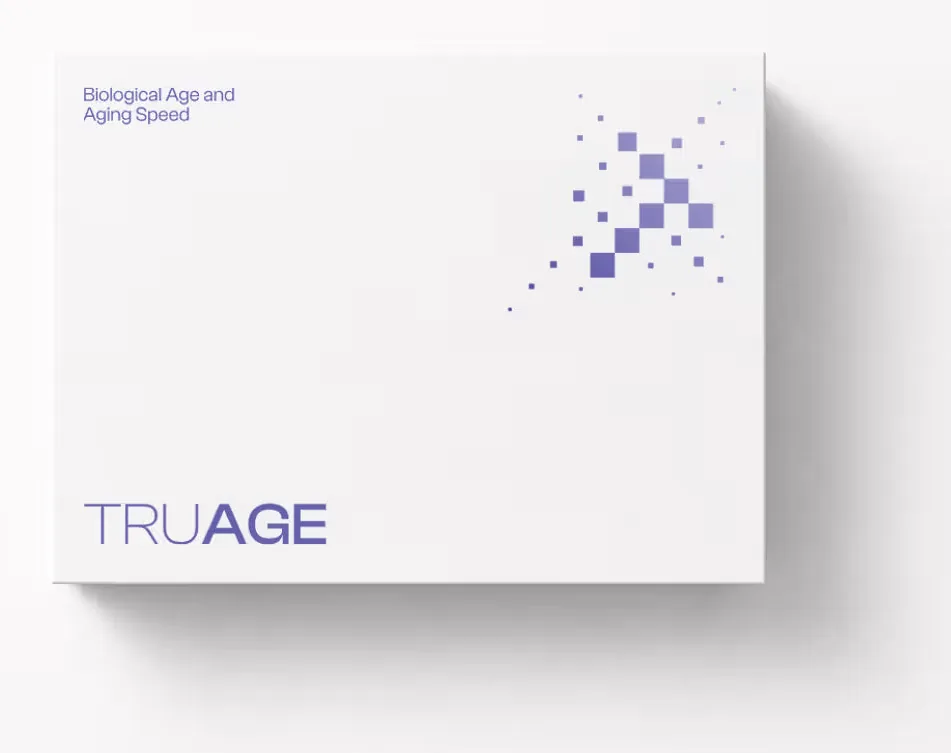
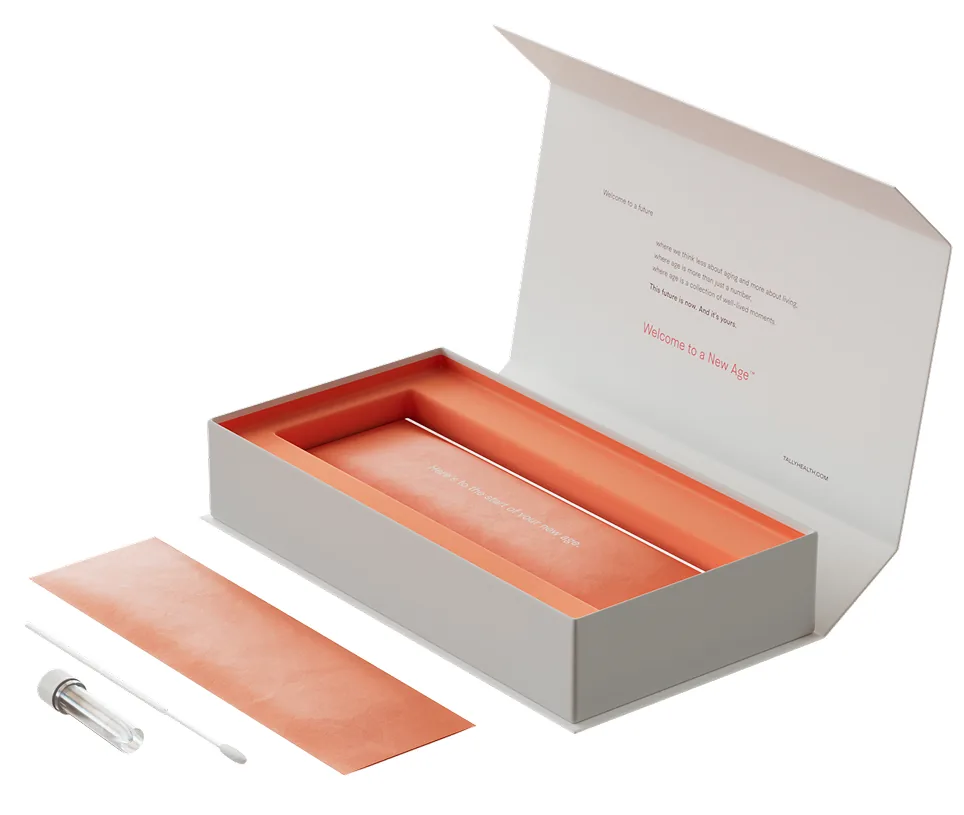
These links go to each brand’s own store and earn us no commission. Prices are dated US snapshots.
Sources
- DNA methylation age of human tissues and cell types (Horvath, 2013) Genome Biology, 2013
- DNA methylation GrimAge strongly predicts lifespan and healthspan (Lu et al., 2019) Aging, 2019 · cohort study
- DunedinPACE, a DNA methylation biomarker of the pace of aging (Belsky et al., 2022) eLife, 2022 · cohort study
- A computational solution for bolstering reliability of epigenetic clocks: implications for clinical trials and longitudinal tracking Nature Aging, 2022
- Biological Versus Technical Reliability of Epigenetic Clocks and Implications for Disease Prognosis and Intervention Response Aging Cell, 2026
- Validation of biomarkers of aging Nature Medicine, 2024
- TruAge Test TruDiagnostic · manufacturer
- TruAge Test listing on TruDiagnostic's store, including the Annual Subscription plan TruDiagnostic · manufacturer · price read from the store’s product data
- TallyAge Test Kit (not found on October 30, 2026) Tally Health · manufacturer
- Tally Health Shop page Tally Health · manufacturer
- Help center: How reliable are the TallyAge test results? Tally Health · manufacturer
- CheekAge: a next-generation buccal epigenetic aging clock associated with lifestyle and health (Shokhirev et al., 2024) GeroScience, 2024 · cohort study
- Superpower home page Superpower · manufacturer
- Eleven telomere, epigenetic clock, and biomarker-composite quantifications of biological aging: do they measure the same thing? American Journal of Epidemiology, 2018 · cohort study
- TruAge for healthcare providers TruDiagnostic · manufacturer
- TruDiagnostic refund policy (effective April 2, 2025) TruDiagnostic · manufacturer
- OMICmAge quantifies biological age by integrating multi-omics with electronic medical records (Chen et al., 2026) Nature Aging, 2026 · cohort study
- Comparing fourteen consensus biomarkers of aging: epigenetic pace of aging as the strongest predictor of mortality in BASE-II Biomarker Research, 2026 · cohort study
- Tally Health terms of service (effective April 29, 2026) Tally Health · manufacturer
- CheekAge, a next-generation epigenetic buccal clock, is predictive of mortality in human blood (Shokhirev et al., 2024) Frontiers in Aging, 2024 · cohort study
- Help center: How was the TallyAge test built? Tally Health · manufacturer
- GlycanAge shop: the GlycanAge test plans and prices GlycanAge · manufacturer
- Glycans are a novel biomarker of chronological and biological ages (Krištić et al., 2014) Journal of Gerontology: Series A, 2014 · cohort study
How this was written. Written from the sources listed above, checked . It is general information, not medical advice. Talk to a clinician before acting on anything here if you have a health condition or take medication.
Our editorial policy →